paiza data leak risk: test server open to ex-staff for 13 years
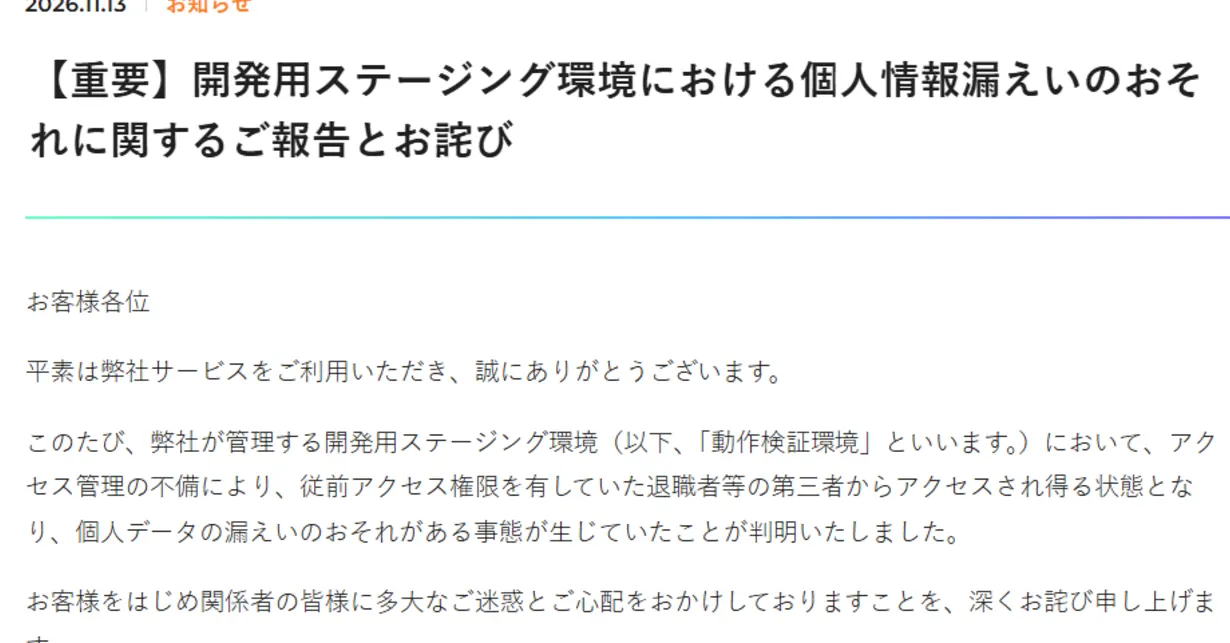
Japanese engineer job platform paiza says up to 902,576 records sat on a test server that former staff could still reach for about 13 years.
 SUMO· the number puzzle
 Dialo· learn languages by speaking
 ediviewer· read EDI files like documents
 giftdetect· the right gift in minutes
If you ever left a job and still remembered the password to the company's test server, you would hope someone had changed it. At paiza, a Japanese job-hunting and coding-study platform for IT engineers, nobody did, for roughly 13 years.
On November 13 the company said personal data on up to 902,576 people was stored in a development staging environment (a copy of the live system used for testing) that third parties, including former employees who once had access, could potentially reach. The login password was a fixed string, and credentials such as basic authentication details had not been changed for a long time. The exposure ran from when the environment was built in 2013 until access was restricted on August 13, 2026.
What data was affected in the paiza leak?
The test data was meant to be masked, with names and addresses hidden or replaced, but for some fields there were periods when it was not. Information at risk includes birth dates, gender, work and education history, prefecture of residence, nicknames, blog URLs, application history, desired job conditions, user IDs and skill-check and study records. For some periods it also covers email addresses of course participants, sub-email addresses, GitHub IDs and student numbers. Business client data was included too: organisation names, company details, contact department, job title, name readings and mobile phone numbers.
Paiza says users' names, addresses, phone numbers, main email addresses and passwords were masked.
How was it found, and what happens now?
A government agency made an inquiry on July 17, and the company's investigation confirmed flawed authentication management. Emergency measures started on August 10, and on August 13 the affected environment was cut off and access controls tightened. Internal security manuals were updated on September 4, and the emergency work continued until November 5. The company has also reported to the authorities.
Paiza says it obtained confidentiality pledges from departing staff and has found no evidence that data actually left the company. It will keep monitoring and analysing logs, remove access rights promptly when people leave, recheck its masking standards for test data and use outside experts for regular vulnerability checks.
Apps worth a look
SUMO: the number puzzleTap the right tiles, add them up, hit the target. Easy to learn, hard to master. Free, for all ages.
Dialo: learn languages by speakingTalk to an AI conversation partner; every sentence comes back corrected and explained in your language. 9 languages, A1 to C2.
ediviewer: read EDI files like documentsOpen EDIFACT and X12 messages, see every segment explained, convert to JSON/XML, export PDF and Excel. Runs locally, no upload.
giftdetect: the right gift in minutesPick who it is for, the occasion and their personality. The search engine reads product descriptions from local shops and ranks what fits. Free, no sign-up.
More from this day
See all →
Comet 220P/McNaught suddenly got 1,000 times brighter. Here's why

Coral Hart used AI to write 370 books in 20 months

WhatsApp Zaps: self-deleting photos and videos for any chat

Green SM taxis: Karnataka halts new registrations, eyes mandatory meters
More in: Security
See all →
NoisyTCP Linux bug can crash a server remotely, no login needed

Artex AI hacking tool: FBI says it breaches networks in under three hours

Estonia's digital exile government: running the state from abroad