Nio ES9 road test: 1,150 km in China with four battery swaps
A four-day, 1,150 km family trip in the 5.37 m Nio ES9 showed how battery swapping, a huge cabin and rear-wheel steering work on real Chinese roads.
 SUMO· the number puzzle
 Dialo· learn languages by speaking
 ediviewer· read EDI files like documents
 giftdetect· the right gift in minutes
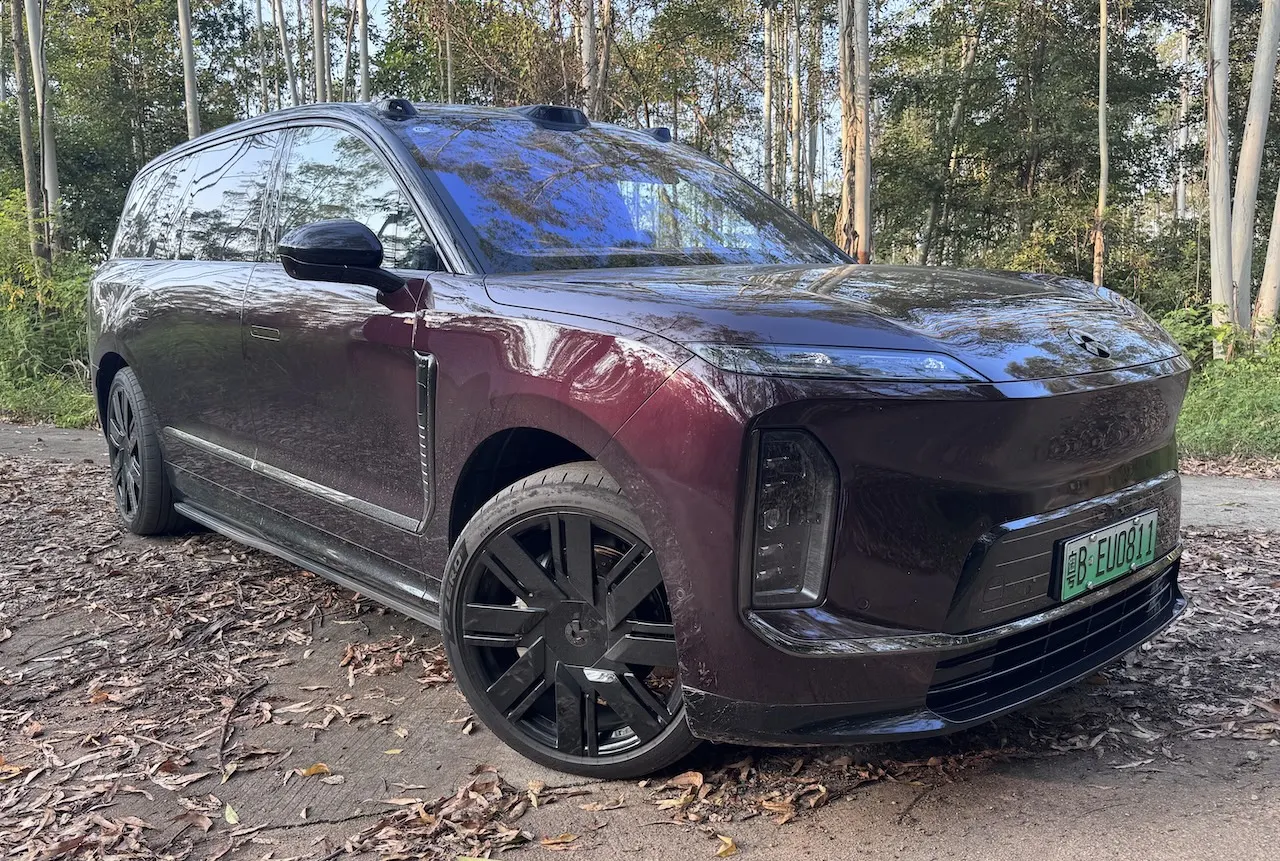
The Nio ES9 is a very convincing family road-trip machine, provided you can live with its size. Over four days, a round trip between Shenzhen and Shaoguan covered 1,150 km, with four battery swaps and a whole family on board, on motorways and on country roads and forest tracks in northern Guangdong.
A different size class
At 5.37 m long, 2.03 m wide and 1.87 m tall, with a 3.25 m wheelbase, the ES9 is the largest electric SUV built in China. It is 8.5 cm longer than the third-generation Nio ES8 and, by the figures quoted, outsizes the BMW X7 and the electric Range Rover. The tested version weighs 2,845 kg empty, and Nio claims a drag coefficient of 0.264.
The width is felt on the narrowest country roads, where the driver has to slow down and watch the verge. In Shenzhen traffic, however, the ES9 proved easy to handle, helped by a high driving position and rear-wheel steering of up to 8.3 degrees per side, which gives a 10.9 m turning circle.
Built for the second row
The cabin has six seats and puts the second row first: 59.5 cm of knee room, a 42-point massage function and a 20-point massaging footrest. An 8.8-litre fridge, running from -2 to 55 °C, kept drinks and snacks within reach of the children, and two 40.6 cm 3K screens in the front seatbacks turned a Nintendo Switch into a rear-seat games console. Luggage space totals 716 litres, including a 216-litre front trunk, and the bags of four people for four days fitted easily.
Underneath sits Nio's third-generation platform with a 102 kWh NMC battery and a 900 V architecture. The in-house stack includes the SkyOS operating system, the Shenji NX9031 driver-assistance chip, which Nio says matches two Nvidia Thor chips, and the SkyRide chassis with active hydraulic suspension and steer-by-wire. The AQUILA perception system relies on 31 sensors, including a long-range lidar.
Caveats
The sensor modules on the body are, in the author's view, a little too visible. Whether the assisted-driving system can match Huawei's new ADS 5 remains to be established.
Apps worth a look
SUMO: the number puzzleTap the right tiles, add them up, hit the target. Easy to learn, hard to master. Free, for all ages.
Dialo: learn languages by speakingTalk to an AI conversation partner; every sentence comes back corrected and explained in your language. 9 languages, A1 to C2.
ediviewer: read EDI files like documentsOpen EDIFACT and X12 messages, see every segment explained, convert to JSON/XML, export PDF and Excel. Runs locally, no upload.
giftdetect: the right gift in minutesPick who it is for, the occasion and their personality. The search engine reads product descriptions from local shops and ranks what fits. Free, no sign-up.
More from this day
See all →
Calogena wins €40 million EU grant for first commercial SMR

Windows 11 Registry Editor Gets a WinUI 3 Version as a Demo

JRH ASI to Finance Radar System Production for Ukrainian Partner
Budimex Tests Autonomous Rollers as Poland's Labor Shortage Bites
More in: Automotive
See all →
Volkswagen Software 3.x Update Adds Battery Heating to Older EVs

BMW Neue Klasse: Samsung SDI and LG to Supply Gen6 Cells Locally
BMW iX3 40 tested: the base model still rewards drivers