Neuralink N1 Lets a Patient Control Grok and Call on iPhone
Neuralink showed its N1 implant letting a person with severe speech impairment command the Grok AI agent, type on an iPhone and phone his wife by thought.
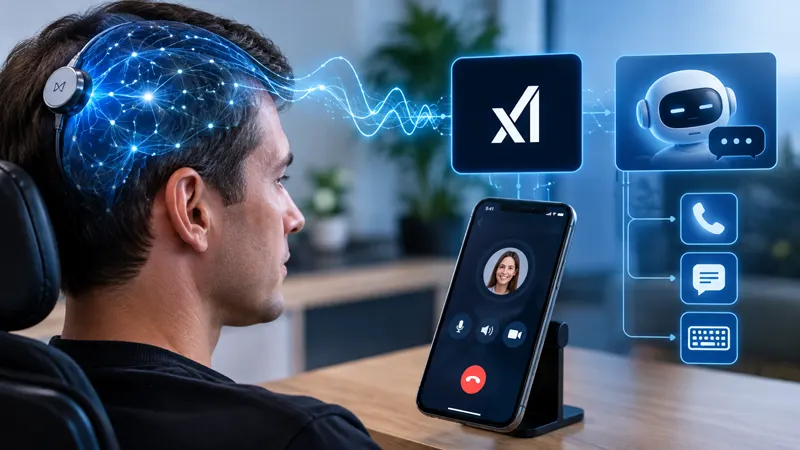
Neuralink has demonstrated new capabilities for its N1 brain implant that let a person with severe speech impairment command the Grok AI agent, type on an iPhone and make phone calls using neural signals alone.
The tests took place within VOICE, a clinical study aimed at restoring communication for people who have lost speech. According to the company, the new functions were built during a 72-hour engineering marathon held at the participant's home.
Thinking a command to Grok
The most striking feature lets the user mentally say "Hey Neuralink" and then silently formulate a task. The system detects neural activity linked to the attempt to speak those words and passes the command to Grok, which carries out the actions on a computer on its own.
Another change is automatic detection of speech intent. Previously the participant had to press a button to start and stop recording of brain signals for decoding. Now the algorithm determines when the person intends to speak and switches processing on and off by itself.
Calls, typing and tuning
The Bloom app was taught to feed synthesized speech directly into the iPhone's microphone stream during a call, so the other party hears words generated from the user's neural signals. In the demonstration, the participant called his wife and talked with her.
Engineers also added thought-driven text entry in iOS apps, faster correction of recognition errors and the ability to launch the speech interface from the lock screen. A real-time visualization of brain activity shows the intensity and distribution of recorded signals, helping users find the most effective mental speech commands.
Still experimental
Neuralink stresses that these are experimental developments, not a finished product, and it has not published figures for recognition accuracy or command latency. The implant records neuron electrical activity, and decoding algorithms convert it into intended words or commands. It does not read arbitrary thoughts, only activity tied to the intention to speak.
VOICE is designed for people with severe speech impairment, including those caused by amyotrophic lateral sclerosis, spinal cord injury and stroke. N1 has not yet received FDA approval for commercial use.
More from this day
See all →



More in: Hardware
See all →
Touch MacBook Pro Hands-On: First Impressions From Los Angeles

Sony Ends Sales of Its Last Standalone UHD Blu-ray Player