Neiry pigeon biodrones now take aerial photo orders
Russian company Neiry now sells aerial photography by pigeons with brain implants, steered by a remote operator. Prices start at 300,000 rubles per square kilometre.
 SUMO· the number puzzle
 Dialo· learn languages by speaking
 ediviewer· read EDI files like documents
 giftdetect· the right gift in minutes
You can now hire a pigeon with electrodes in its brain to photograph your land. Russian neurotech company Neiry has started taking commercial orders for aerial photography with its pigeon "biodrones", at a price from 300,000 rubles per square kilometre.
How do pigeon biodrones work?
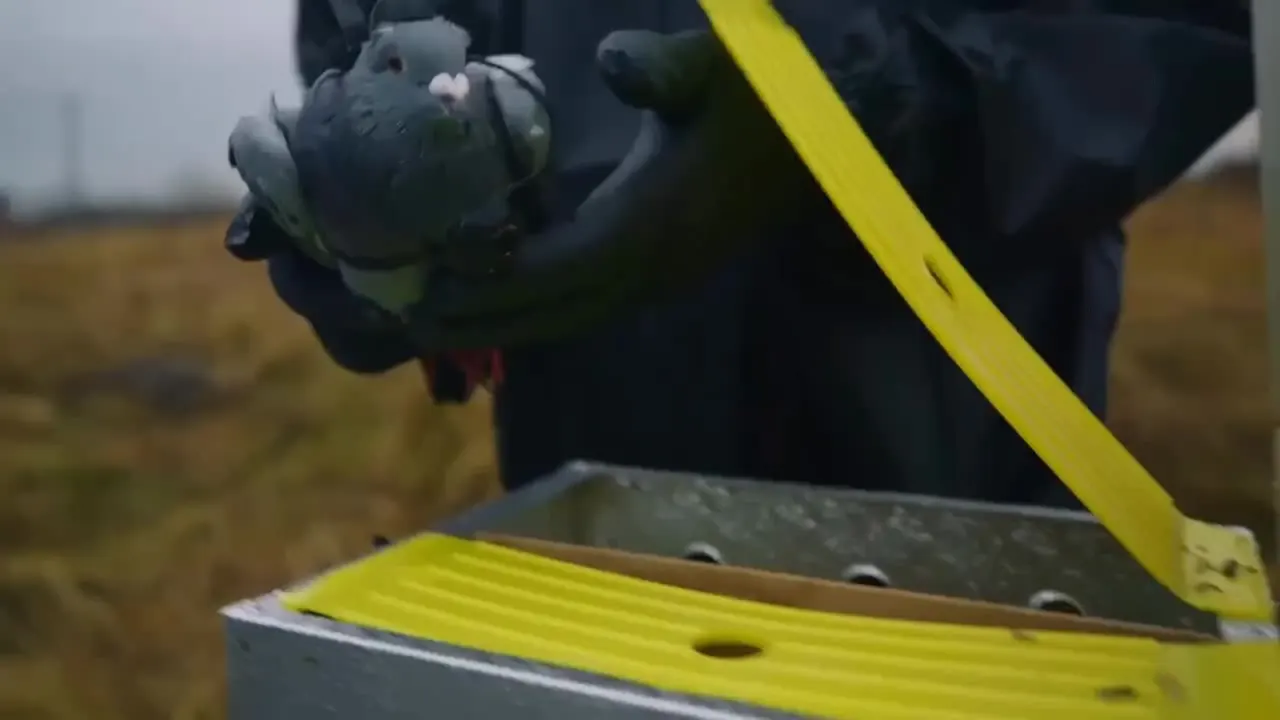
In 2025 Neiry implanted electrodes in a pigeon's brain and linked them to a stimulator. It sends impulses that tell the bird to take off, turn or land. A camera sits on the bird's chest and gives a spatial resolution of under 20 cm per pixel. The company says it will later improve that to 2 cm per pixel.
Neiry says it built the technology itself: biocompatible electrodes, the method of implanting them in a bird's brain, and the electronics the pigeon wears before each flight.
How much does it cost, and is it legal?
The company calls the starting price "comparable" with ordinary drones and promises lower rates for regular flights along the same route. Its argument for pigeons is practical. They don't need recharging, and there are no flight bans for birds, so nobody has to plan around restricted airspace. Neiry sent queries to Russia's Ministry of Natural Resources, the Institute of Ecology, the Ministry of Science and other bodies. It says they found no conflict with the law.
The birds have logged more than 100 flights outside the lab over a year of testing. The longest lasted more than 10 hours, with the operator steering from 100 km away.
Who is Neiry?
Alexander Panov founded Neiry in 2017, and it now employs more than 350 people. Besides biodrones it works on medical brain implants for people and a sleep wearable called Clary Luna. In 2021 it raised 360.5 million rubles from a National Technology Initiative fund and 180.5 million rubles from outside investors. In February 2025 it raised more than 500 million rubles in a Series B round.
Apps worth a look
SUMO: the number puzzleTap the right tiles, add them up, hit the target. Easy to learn, hard to master. Free, for all ages.
Dialo: learn languages by speakingTalk to an AI conversation partner; every sentence comes back corrected and explained in your language. 9 languages, A1 to C2.
ediviewer: read EDI files like documentsOpen EDIFACT and X12 messages, see every segment explained, convert to JSON/XML, export PDF and Excel. Runs locally, no upload.
giftdetect: the right gift in minutesPick who it is for, the occasion and their personality. The search engine reads product descriptions from local shops and ranks what fits. Free, no sign-up.
More from this day
See all →
Beget regains .ru and .рф registrar status after cyberattack

Notch vibe coding: Minecraft's creator went from 'Reject AI' to Claude
Facebook photo suggestions cost Meta an €805 million fine in Italy

Netflix Originals leaving in 2027: 84 titles, incl. Del Toro's Arcadia
More in: Startups
See all →
JioAstro: Jio's AI Vedic astrology platform takes on Astrotalk

Sarvam AI Token Factory runs on private GPUs, says cofounder

Save8: Bewakoof's Ex-CEO Launches an AI Shopping Assistant