Stryx AI: the French startup building drones that ram drones
Stryx AI, founded by Brevo's Armand Thiberge, raised €7.7 million to build drones that crash into enemy drones. One number is still missing: the price.
 SUMO· the number puzzle
 Dialo· learn languages by speaking
 ediviewer· read EDI files like documents
 giftdetect· the right gift in minutes
A cheap FPV drone costs a few hundred euros. Shooting it down with a missile costs far more than the target is worth. Stryx AI, a French startup, wants to fix that maths by sending a drone to crash into the drone.
Founded in 2025 and based in Brétigny-sur-Orge, south of Paris, the company announced on Thursday 19 November its first funding round: €7.7 million. The round is led by its founder and CEO Armand Thiberge, the man behind Brevo (formerly Sendinblue, which became a unicorn in December 2025), alongside Jacques Veyrat's holding Impala. Michaël de Lagarde and Benjamin Benharrosh, cofounders of drone maker Delair, also invested. Every investor is French, which fits the company's "sovereign" pitch.
That pitch has a concrete side. Stryx AI calls its system "ITAR-free", meaning it contains no parts covered by the US arms export rules that let Washington block the resale of equipment with American components. For a European buyer, that means no waiting for a US green light.
How does the Stryx AI system work?
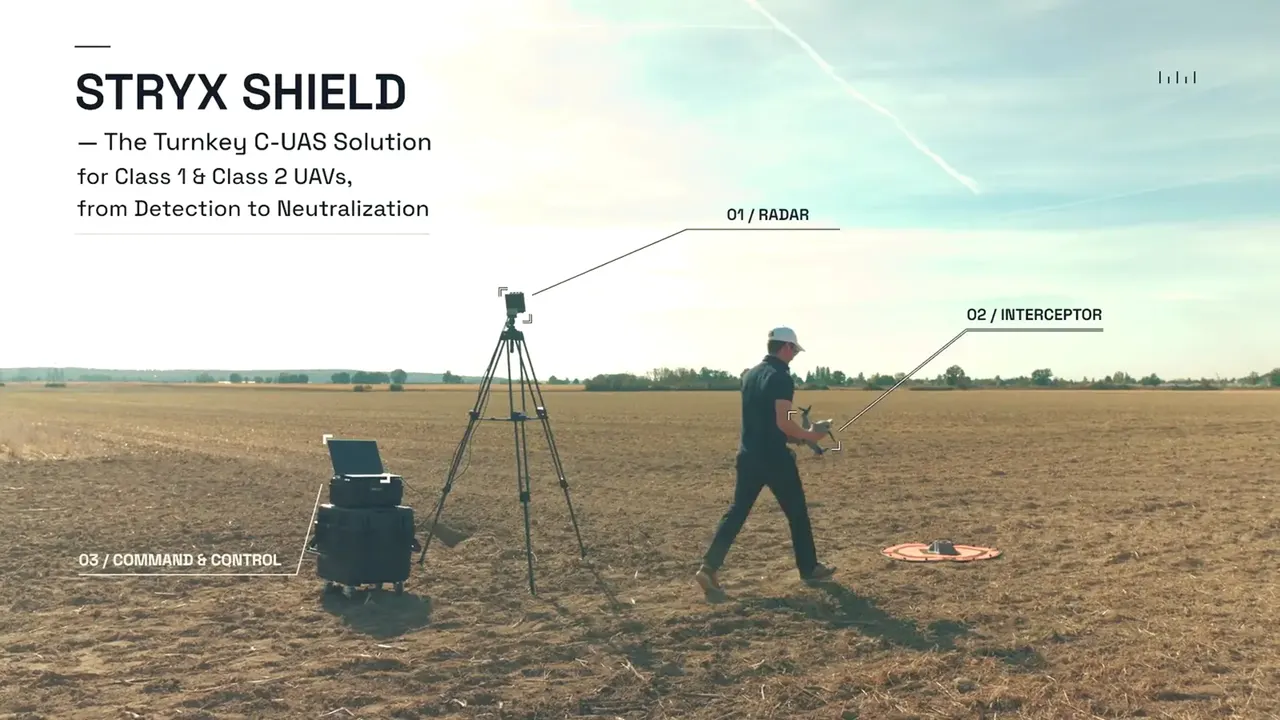
There are four pieces. Stryx Watch is a light radar that spots and tracks drones. Stryx C2 is the software that shows threats and commands fire. Stryx Impact is the AI-guided interceptor, which chases its target alone after takeoff and destroys it by hitting it in flight. Stryx Launch is a station that keeps several interceptors ready to go.
A human operator still decides whether to fire. The system targets FPV drones first, including fibre-optic ones that emit no radio signal and cannot be jammed. The company also says it can go after heavier machines like the Shahed, the Iranian-designed attack drone Russia uses in large numbers.
Is Stryx AI proven, and how much does it cost?
Everything so far rests on prototypes, tested in the French defence innovation agency's Épervier programme. The company says it achieved interceptions in September during the XLAD exercise, and that it signed a first order with French authorities, without naming the customer or the amount.
It is also not alone. The French armed forces picked Latvian Origin Robotics' Blaze in June and ordered 50 Gobi Zephyr interceptors from Harmattan AI in September. And Stryx AI has not disclosed the price of its interceptor or of protecting a site, even though its whole argument depends on being cheap.
The money will first pay for a production line in France, planned for early 2027. The startup, about 20 people today, wants to reach 50 by the end of 2027 and aims for first deliveries that year, selling to armies and sensitive sites such as ports, airports and energy facilities.
Apps worth a look
SUMO: the number puzzleTap the right tiles, add them up, hit the target. Easy to learn, hard to master. Free, for all ages.
Dialo: learn languages by speakingTalk to an AI conversation partner; every sentence comes back corrected and explained in your language. 9 languages, A1 to C2.
ediviewer: read EDI files like documentsOpen EDIFACT and X12 messages, see every segment explained, convert to JSON/XML, export PDF and Excel. Runs locally, no upload.
giftdetect: the right gift in minutesPick who it is for, the occasion and their personality. The search engine reads product descriptions from local shops and ranks what fits. Free, no sign-up.
More from this day
See all →Hugendubel, Tolino Cloud and eBook.de offline after cyberattack

YouTube app icons: 7 new designs, some retro, are in the works

PC repair job interview: the voltage switch trap he suggested

Google's new 3D emoji need 6GB RAM and 10GB storage, now explained
More in: Startups
See all →
Save8: Bewakoof's Ex-CEO Launches an AI Shopping Assistant

Karnataka bike taxi ban fails as Supreme Court backs Rapido, Uber

Polemos Industries: a 16-year-old's AI missile startup joins Y Combinator