NASA Plans at Least One Giant SLS Moon Rocket Launch a Year
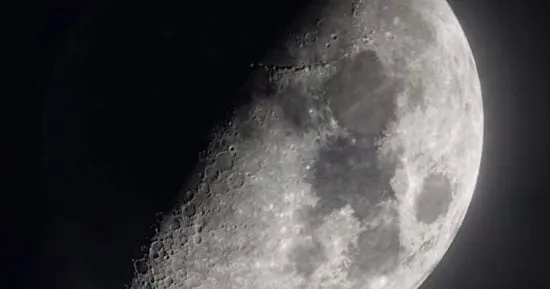
NASA chief Jared Isaacman says the agency wants to fly its giant SLS rocket at least once a year under Artemis, as the Moon race with China heats up.
 SUMO· the number puzzle
 Dialo· learn languages by speaking
 ediviewer· read EDI files like documents
 giftdetect· the right gift in minutes
NASA Administrator Jared Isaacman has outlined a plan to launch the agency's giant Space Launch System (SLS) rocket at least once every year under the Artemis programme. He says the intensifying space competition with China is pushing the United States to move faster.
Isaacman spoke after the success of Artemis 2, which flew around the Moon in April 2026. "I feel good, and I think we are definitely on a more achievable path to the lunar surface today than we were before," he said. Shortly before the interview, NASA announced that Artemis 2 commander Reid Wiseman would become deputy director of the Jet Propulsion Laboratory (JPL).
Why an annual launch matters
Isaacman argued that crewed landings, and eventually a permanent lunar base, will require many SLS launches. Rather than focusing on whether landers are ready, he said, his priority is flying a heavy rocket every year. "We did a successful mission in April 2026, and we will launch again in 2027," he said.
The next flight is Artemis 3, a crewed mission to low Earth orbit. It will test docking between the Orion capsule and one or both lunar landers in the programme: SpaceX's Starship and Blue Origin's Blue Moon. Isaacman said the mission will help prepare NASA for Artemis 4, the first crewed landing, targeted for 2028.
He called one launch a year not ideal, and said he does not expect a return to the early Space Shuttle pace of about four missions a year or to Apollo-era cadence. But he sees it as the minimum needed to keep operational skills sharp and to make the most of the risk taken and the taxpayer money spent.
A closer race with China
Isaacman said Artemis differs from Apollo, noting that Artemis 2 is very different from Apollo 8 and Artemis 3 from Apollo 9. What the two eras share, he said, is the energy and capability of NASA and its industry partners, which he considers equal to the 1960s.
He also acknowledged a real space race, now with China rather than the Soviet Union. Unlike in the Cold War, when the US held a wide lead in computing and technology, "China is very close to us," he said. The US aims to land by the end of 2028, while China targets the end of 2029. Isaacman said China has already shown its landers, rovers and spacesuits, along with an architecture based on two launches and reusability technologies.
Apps worth a look
SUMO: the number puzzleTap the right tiles, add them up, hit the target. Easy to learn, hard to master. Free, for all ages.
Dialo: learn languages by speakingTalk to an AI conversation partner; every sentence comes back corrected and explained in your language. 9 languages, A1 to C2.
ediviewer: read EDI files like documentsOpen EDIFACT and X12 messages, see every segment explained, convert to JSON/XML, export PDF and Excel. Runs locally, no upload.
giftdetect: the right gift in minutesPick who it is for, the occasion and their personality. The search engine reads product descriptions from local shops and ranks what fits. Free, no sign-up.
More from this day
See all →
Windows 11 Registry Editor Gets a WinUI 3 Version as a Demo
JRH ASI to Finance Radar System Production for Ukrainian Partner

Budimex Tests Autonomous Rollers as Poland's Labor Shortage Bites
Android Auto Ends Support for Phones Running Android 9 and 10
More in: Space
See all →
Innospace Sets Nov. 29 Relaunch of SEBIT Rocket in Brazil
Rakuten and AST SpaceMobile Form Rakuten AST for Japan's J-LEO
NASA Opens Astronaut Applications for Artemis Moon Base Missions