Kakao Mobility Teams With Nvidia on Level 4 Self-Driving for Kia PBVs
Kakao Mobility signed an MOU with Nvidia to build a Level 4 autonomous system, combining its own driving AI with Nvidia hardware and safety tech for Kia's PBVs.
 SUMO· the number puzzle
 Dialo· learn languages by speaking
 ediviewer· read EDI files like documents
 giftdetect· the right gift in minutes
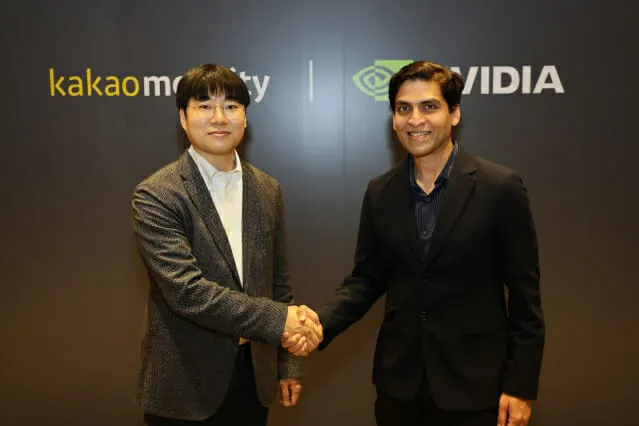
Kakao Mobility is partnering with Nvidia to develop Level 4 autonomous driving technology, with the first deployment planned on Kia's purpose-built vehicles (PBVs). The South Korean company said it signed a memorandum of understanding with Nvidia on November 9 at the Westin Seoul Parnas in Gangnam, aiming to commercialize driverless services.
Under the agreement, Kakao Mobility's proprietary driving AI model will be combined with Nvidia's computing infrastructure, sensing technology and safety systems. Level 4 refers to vehicles that drive themselves without driver intervention within defined conditions and zones. Kim Jin-kyu, vice president of Kakao Mobility's physical AI division, and Gaurav Agarwal, senior director of Nvidia's automotive business, attended the signing.
What Nvidia brings
Kakao Mobility has been testing its technology in downtown Gangnam and is refining an end-to-end (E2E) approach, in which a single AI model handles everything from perception to decision-making. The company plans to adopt a high-performance autonomous driving computing unit (ADCU) equipped with two Nvidia DRIVE AGX Thor platforms to process large AI workloads in real time.
It will also use Nvidia's Hyperion sensor and computing reference architecture to improve compatibility and system stability across the vehicle, sensors and compute hardware. Nvidia's Halos safety system will be applied to software development and validation, with the goal of verifying safety from development through live service.
Link to Kia
In July, Kakao Mobility signed a partnership with Kia to develop PBVs for autonomous services. The company now plans to integrate its software with Nvidia's AI computing and safety technology in those vehicles, and to pursue development and supply of Level 4 service vehicles.
Kakao Mobility CEO Ryu Geung-sun said the partnership will speed up E2E refinement and help build a global ecosystem linking software, components and automakers. Rishi Dhall, Nvidia's vice president of automotive, said he expects the collaboration to accelerate safe, scalable autonomous services in Korea.
The company intends to validate the technology and build a commercial foundation in South Korea first, then explore overseas expansion over the medium to long term.
Apps worth a look
SUMO: the number puzzleTap the right tiles, add them up, hit the target. Easy to learn, hard to master. Free, for all ages.
Dialo: learn languages by speakingTalk to an AI conversation partner; every sentence comes back corrected and explained in your language. 9 languages, A1 to C2.
ediviewer: read EDI files like documentsOpen EDIFACT and X12 messages, see every segment explained, convert to JSON/XML, export PDF and Excel. Runs locally, no upload.
giftdetect: the right gift in minutesPick who it is for, the occasion and their personality. The search engine reads product descriptions from local shops and ranks what fits. Free, no sign-up.
More from this day
See all →
Calogena wins €40 million EU grant for first commercial SMR
Windows 11 Registry Editor Gets a WinUI 3 Version as a Demo
JRH ASI to Finance Radar System Production for Ukrainian Partner
Budimex Tests Autonomous Rollers as Poland's Labor Shortage Bites
More in: Automotive
See all →
Volkswagen Software 3.x Update Adds Battery Heating to Older EVs
BMW Neue Klasse: Samsung SDI and LG to Supply Gen6 Cells Locally
BMW iX3 40 tested: the base model still rewards drivers