Juicyway Plans Tokenised 'People's Exchange' for African Capital
Juicyway says Nigeria's SEC has given approval in principle for a blockchain-based exchange that would link African assets with global investors.
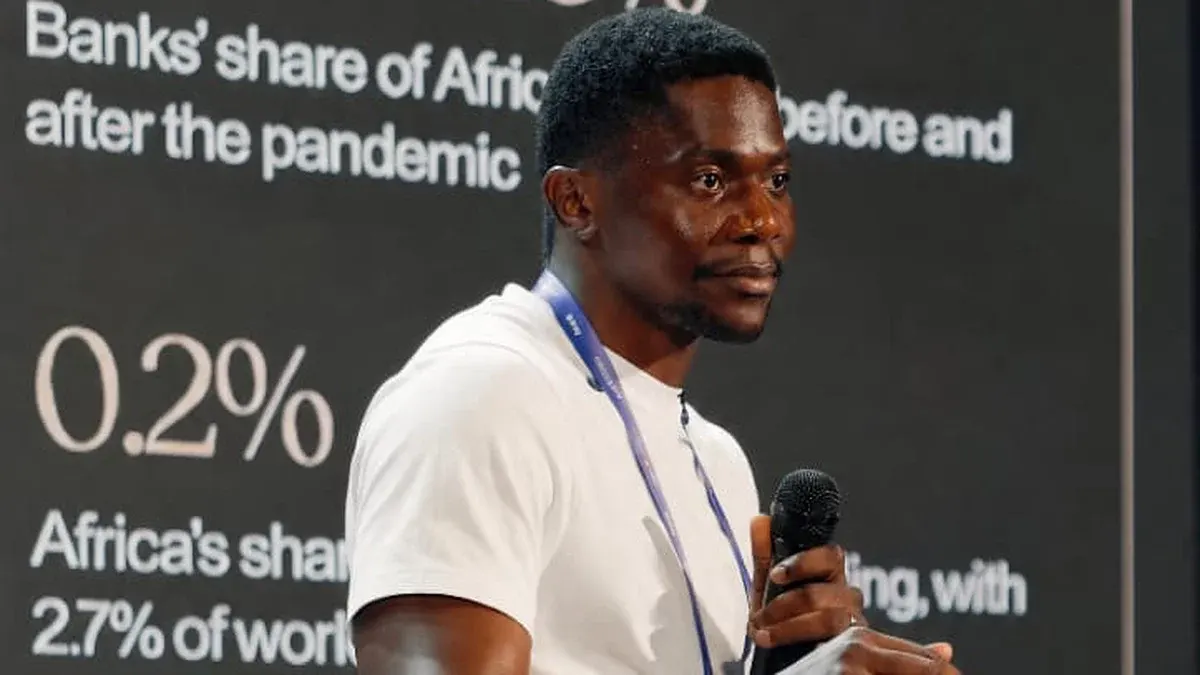
Juicyway, a cross-border payments company, is building a blockchain-based exchange meant to connect African assets with global investors. Founder and chief executive Ife Johnson said the company has received approval in principle from Nigeria's Securities and Exchange Commission (SEC) to develop the platform, called the 'People's Exchange'.
Johnson presented the plan at Moonshot by TechCabal in Lagos. His central argument: faster payments alone cannot solve Africa's financing problem. "Africa needs more shared infrastructure and fewer isolated winners," he said.
Liquidity first, then wider markets
The idea grows out of Juicyway's daily work. Software can send a payment instruction in seconds, but the money still has to be available in the right currency in the right country. "For roughly 95% of the transactions that we have to carry out, we have to perform settlements," Johnson said.
For that reason, the exchange would first focus on financing this liquidity. Later uses could include mortgages, trade receivables, energy, commodities and stakes in private companies. Johnson says the same shortage affects the wider economy, because capital is split across dozens of small markets.
He cited two figures. According to the African Development Bank's 2025 trade finance report, unmet demand for trade finance in Africa was between $74 billion and $92 billion in 2024. The OECD's Africa Capital Markets Report 2025 says African companies raised about $220 billion in equity on local stock markets between 2000 and 2024, just 1% of the global total.
How tokenisation would work
Johnson proposed tokenising investments, meaning blockchain-based records of assets and securities, to structure them, record ownership and sell them across borders. Stablecoins would move and settle the money. "I don't think Africa needs 29 exchanges," he said. "I think it needs one market that connects them all."
The goal is to let African businesses reach investors beyond their home markets. That will take more than shared technology: investors will need confidence in the underlying assets, in their ownership rights, and in how they are repaid or can sell their stakes.
Johnson described the exchange as a long-term project. "I want his generation to inherit markets that finance the ambitions, rather than ambitions constrained by the absence of markets," he said, referring to his son.
Apps worth a look
 SUMO: the number puzzle
Tap the right tiles, add them up, hit the target. Easy to learn, hard to master. Free, for all ages.
 Dialo: learn languages by speaking
Talk to an AI conversation partner; every sentence comes back corrected and explained in your language. 9 languages, A1 to C2.
 ediviewer: read EDI files like documents
Open EDIFACT and X12 messages, see every segment explained, convert to JSON/XML, export PDF and Excel. Runs locally, no upload.
More from this day
See all →
Fireside Ventures Cofounder Vinay Singh to Step Down After Nine Years
Zocket bets on Brand Brain to differentiate enterprise marketing AI

ValueQuest Tristar Fund raises over Rs 2,100 crore for manufacturing