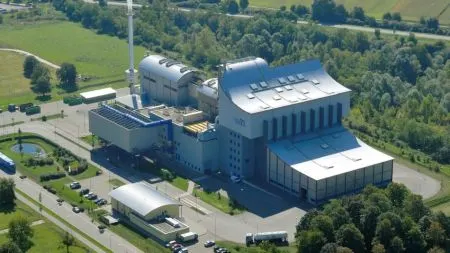
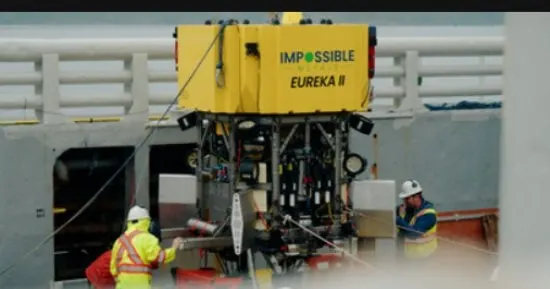
Impossible Metals' Eureka Robot Collects Seabed Nodules at 4,000 m
Impossible Metals says its AI-guided robot Eureka picked polymetallic nodules from the Pacific floor below 4,000 metres and surfaced on its own, without dredging.
 SUMO· the number puzzle
 Dialo· learn languages by speaking
 ediviewer· read EDI files like documents
 giftdetect· the right gift in minutes
Impossible Metals, a US company, says its AI-driven robot Eureka has collected minerals from the Pacific Ocean floor at a depth of more than 4,000 metres. The robot gathered about 450 grams of mineral deposits and returned to the surface autonomously during a research trip in September.
The test took place in the Clarion-Clipperton zone and targeted polymetallic nodules. According to the company's statement, an AI vision system identifies which rocks can be collected and avoids those showing marine organisms. The company describes it as the first selective, fully autonomous collection of these nodules at such depth.
How the robot avoids dredging the seabed
Eureka hovers above the seabed rather than driving along it. Its vision systems analyse the surroundings, and mechanical arms pick only the chosen rocks. To return, the robot uses a buoyancy-control system based on water displacement, so no long pipes are needed to lift material from the deep.
The nodules contain minerals used in electronics and batteries. Conventional deep-sea mining raises concerns about destroyed marine habitats and stirred-up sediment. The company says its system aims to reduce those effects, but the trial does not yet prove an absence of environmental harm or readiness for industrial-scale operation.
What comes next
Impossible Metals plans a larger version, Eureka III, to be assessed in 2027 by an independent scientific team aboard the German research vessel RV SONNE. The assessment is part of an environmental-impact study overseen by Germany's Federal Institute for Geosciences and Natural Resources.
The minerals gathered in the test will go to research by Viridian Biometals, which is studying whether bacteria can extract metals in place of some chemical processes. The September trial is a proof of concept for selective collection in the deep ocean, not the start of commercial mining and not evidence of its environmental safety at scale.
Apps worth a look
SUMO: the number puzzleTap the right tiles, add them up, hit the target. Easy to learn, hard to master. Free, for all ages.
Dialo: learn languages by speakingTalk to an AI conversation partner; every sentence comes back corrected and explained in your language. 9 languages, A1 to C2.
ediviewer: read EDI files like documentsOpen EDIFACT and X12 messages, see every segment explained, convert to JSON/XML, export PDF and Excel. Runs locally, no upload.
giftdetect: the right gift in minutesPick who it is for, the occasion and their personality. The search engine reads product descriptions from local shops and ranks what fits. Free, no sign-up.
More from this day
See all →


More in: Science
See all →
Robot Dogs Against Wolves: Padua Project Draws Cost Criticism
TU Dresden Plans Molten Salt Reactor to Recycle Nuclear Waste
Diraq Runs Silicon Spin Quantum Computer in Equinix Data Center