Huawei custom HBM with hybrid bonding accepted at ISSCC 2027
Huawei has a paper on custom HBM built with hybrid bonding at ISSCC 2027. Korean academics say Samsung and SK hynix still lead in mass production.
 SUMO· the number puzzle
 Dialo· learn languages by speaking
 ediviewer· read EDI files like documents
 giftdetect· the right gift in minutes
Huawei has built a custom high-bandwidth memory (HBM) chip using hybrid bonding, and the paper is going to the world's biggest chip-design conference. The timing says a lot: with US export controls limiting its access to leading-edge manufacturing, the company is betting on stacking chips instead.
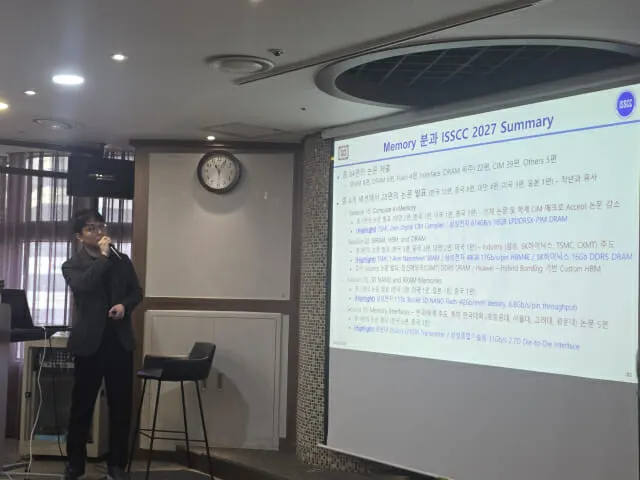
The acceptance was announced on 25 November at a press conference in Seoul for ISSCC 2027, a event nicknamed the "Olympics of chip design". The conference takes place in San Francisco next February. Huawei's paper, titled as a custom HBM based on five-layer wafer-on-wafer (WoW) hybrid bonding, will be presented in the memory session. The company also submitted a mobile chip paper in which logic is folded into two layers, cutting area by 17% and power by 15%.
What is hybrid bonding?
Traditionally, stacked chips are joined with small solder bumps. Hybrid bonding drops the bumps and fuses the copper wiring directly. The stack gets thinner and data moves more efficiently.
Choi Jae-hyuk, a professor at Seoul National University, says China is pushing vertical connections such as hybrid bonding and logic folding as an alternative because equipment problems limit how far it can shrink chip features.
Is Korea falling behind?
Some worry that Huawei is moving faster than Korean makers. Academics disagree. Choi says Samsung is already developing different custom HBM products with major US tech companies at near-commercial level using hybrid bonding, and that SK hynix is doing the same. Samsung will present a 12-layer, 48GB HBM4E with 4.35TB/s bandwidth at the conference.
Still, China is not to be ignored. This year the memory track accepted two DDR5 DRAM papers from CXMT for the first time. KAIST professor Kim Bong-jin says blind review has reached the point where it is hard to tell Samsung, SK hynix and CXMT papers apart, though proving a technique in a paper differs from mass-producing it. Choi sees no immediate threat, but expects the side that has tried the technology more to have an edge if it becomes important.
ISSCC 2027 set a record: 1,029 submissions and 282 accepted papers, up 6%. Asia-Pacific papers rose from 169 to 193, over 70% of the total. China had 124 and Korea 45.
Apps worth a look
SUMO: the number puzzleTap the right tiles, add them up, hit the target. Easy to learn, hard to master. Free, for all ages.
Dialo: learn languages by speakingTalk to an AI conversation partner; every sentence comes back corrected and explained in your language. 9 languages, A1 to C2.
ediviewer: read EDI files like documentsOpen EDIFACT and X12 messages, see every segment explained, convert to JSON/XML, export PDF and Excel. Runs locally, no upload.
giftdetect: the right gift in minutesPick who it is for, the occasion and their personality. The search engine reads product descriptions from local shops and ranks what fits. Free, no sign-up.
More from this day
See all →
GTA 6 fashion: players turn Jason and Lucia into models
Gemini chat history no longer forces you to share data for AI training

PS5 scam on Vinted: sellers hide "photo only" in the hashtags

Hottracks to end its music business after 34 years in Korea
More in: Hardware
See all →
No Speaker: a MacBook trackpad that sings through its motor

Samsung TV-I: a TV that pauses when you leave the sofa

Fitbit Edge battery replacement: Google's guide is free, the job isn't easy