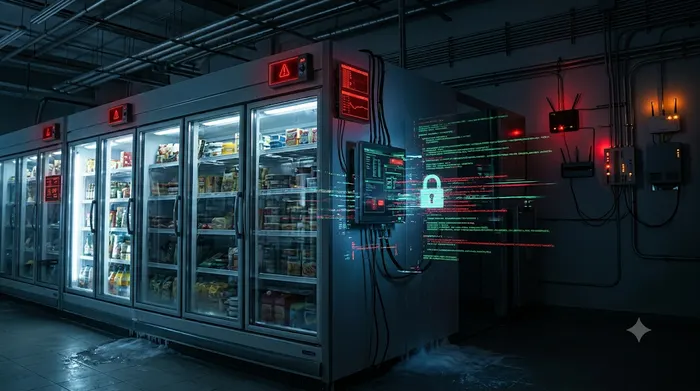
Hacked supermarket fridges: EU agency warns home appliances are next
After attacks on supermarket fridges in Europe, the EU cybersecurity agency says routers and household appliances could be the next thing hackers go after.

 SUMO· the number puzzle
 Dialo· learn languages by speaking
 ediviewer· read EDI files like documents
 giftdetect· the right gift in minutes
First it was supermarket fridges. Next it could be the washing machine in your kitchen. That is the warning from Juhan Lepassaar, executive director of Enisa, the European Union's cybersecurity agency, after several weeks of cyberattacks that hit European supermarkets and a handful of healthcare facilities.
"Today it was fridges, tomorrow it could be routers, and the day after tomorrow household appliances, and so on," he told AFP.
The worry is simple. Washing machines, ovens, robot vacuums and thermostats now connect to the internet, which means someone could try to take them over. Lepassaar says every service a citizen relies on has a layer of code in it, and that code can be hacked if it is not protected.
Christophe Bianco, head of cyber at Thales, made the same point at a press briefing a few days earlier. He has a connected robot lawn mower at home. Every such device, he said, widens the perimeter that has to be watched, and not all of them have been through a security check.
Who is behind the supermarket fridge attacks?
French authorities officially blame Shahid Kaveh, a cyber unit of Iran's Revolutionary Guards. Lepassaar declined to comment on that attribution. He did say that Europe is targeted by several foreign powers, naming China, Iran and North Korea, and the actors aligned with them.
The attacks are not limited to Europe either. The FBI has warned of "systems targeted around the world", including industrial refrigeration and cold-chain monitoring systems.
What is Europe doing about it?
The EU is counting on the Cyber Resilience Act, which puts security obligations on makers of connected devices and takes effect next year. Lepassaar says "all incidents can be avoided", but the real question is whether we are ready to pay for it. "Cybersecurity is not cheap," he said.
He also pointed to the services that could be knocked out in a worse scenario: police and firefighter dispatch, hospitals and transport. If those stop working, he said, the impact would be immediate.
Apps worth a look
SUMO: the number puzzleTap the right tiles, add them up, hit the target. Easy to learn, hard to master. Free, for all ages.
Dialo: learn languages by speakingTalk to an AI conversation partner; every sentence comes back corrected and explained in your language. 9 languages, A1 to C2.
ediviewer: read EDI files like documentsOpen EDIFACT and X12 messages, see every segment explained, convert to JSON/XML, export PDF and Excel. Runs locally, no upload.
giftdetect: the right gift in minutesPick who it is for, the occasion and their personality. The search engine reads product descriptions from local shops and ranks what fits. Free, no sign-up.
More from this day
See all →
TOI-2535 b: the exoplanet that vanished from TESS, and why

Google Photos on Android stops making duplicates when you edit
iPhone worse_query flaw: Binance warns crypto seed phrases at risk