Google Advanced Protection Program: what two weeks in is like
Google's Advanced Protection Program was built for spies' targets, but anyone can join for free. A Japanese reviewer tried it for two weeks and says daily use barely changed.
 SUMO· the number puzzle
 Dialo· learn languages by speaking
 ediviewer· read EDI files like documents
 giftdetect· the right gift in minutes
Google's Advanced Protection Program was designed for journalists, activists and politicians who face state-level hackers. But anyone can sign up, it costs nothing, and one Japanese tech writer has now used it for more than two weeks. His verdict: it feels almost normal.
The reasoning is simple. Personal data keeps leaking from the sites and services he uses, and attackers are said to be using AI to polish their phishing. Experts warn that "just be careful with suspicious emails" will stop working sooner or later. His Google account holds email, wallet, location and activity history, so it was the first one he wanted to lock down.
What is the Advanced Protection Program?
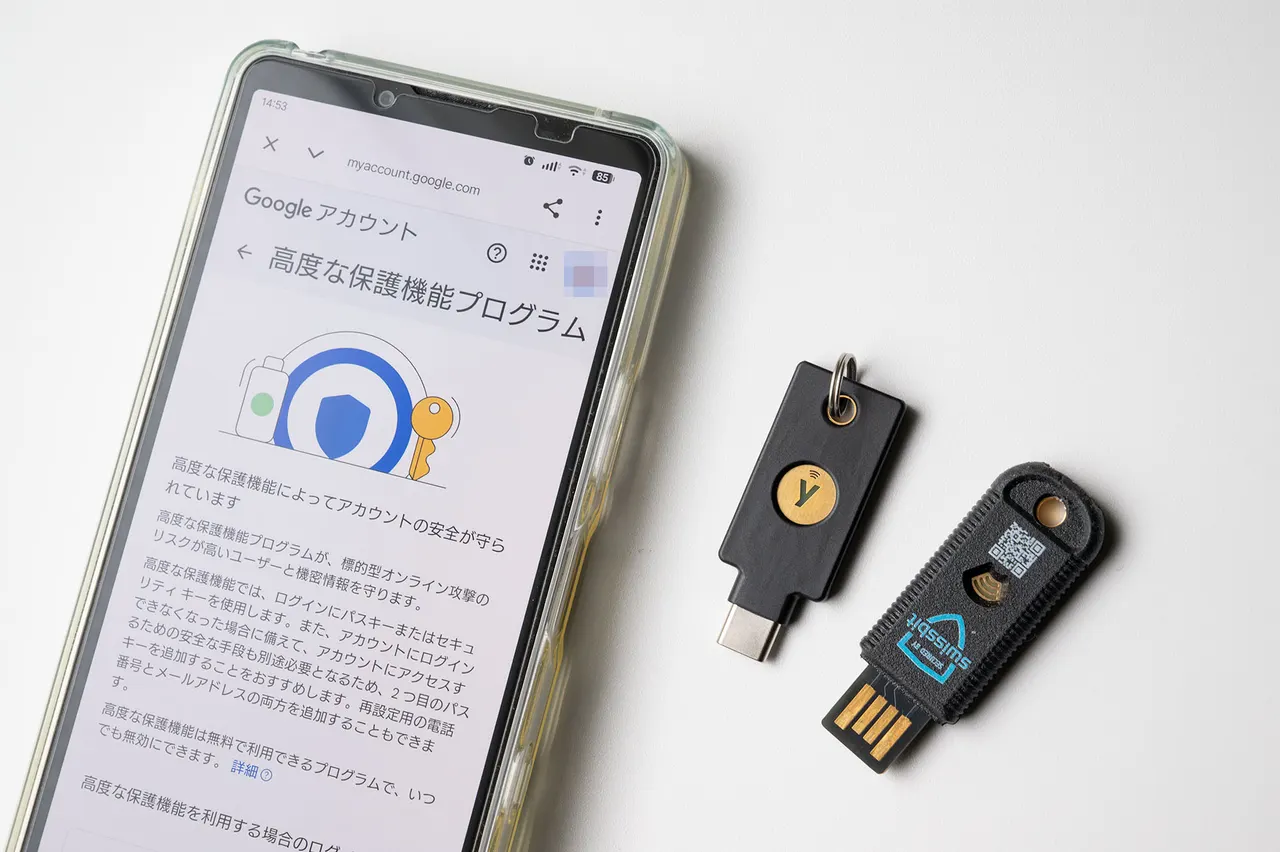
The key rule is that signing in requires a passkey or a hardware security key. Even if you type a password, the second step must be a passkey or key, so phishing that steals typed passwords or one-time codes no longer works. A passkey checks the website's domain automatically, so a fake site can't complete the login even if you are fooled.
You can join with a single passkey, but Google strongly recommends at least two, such as a second phone or a hardware key, in case a device is lost or broken. The program can be switched off at any time.
Chrome also gets stricter. Downloads are checked more closely, and executable files like .exe are blocked a bit more often, though you can still choose to continue. Third-party apps connected to your Google account face tighter checks too.
What changes on Android?
If the same account is signed in on a phone running Android 16 or later, the OS's own advanced protection switches on too. Devices lock automatically when theft-like behaviour is detected or when they go offline, and restart after three days locked. In supported regions, insecure 2G networks are restricted. That matters even in Japan: in May 2025, interference in Tokyo's Shibuya pushed phones onto a fake 2G base station in a line-hijacking incident. Spam and scam protection for calls and messages, limits on app sideloading and USB port restrictions also get stronger.
The writer says he hasn't hit any inconvenience, though he uses account linking and Google Cloud sync only minimally. He plans to keep it on unless something serious comes up.
Apps worth a look
SUMO: the number puzzleTap the right tiles, add them up, hit the target. Easy to learn, hard to master. Free, for all ages.
Dialo: learn languages by speakingTalk to an AI conversation partner; every sentence comes back corrected and explained in your language. 9 languages, A1 to C2.
ediviewer: read EDI files like documentsOpen EDIFACT and X12 messages, see every segment explained, convert to JSON/XML, export PDF and Excel. Runs locally, no upload.
giftdetect: the right gift in minutesPick who it is for, the occasion and their personality. The search engine reads product descriptions from local shops and ranks what fits. Free, no sign-up.
More from this day
See all →
Can AI break RSA encryption before quantum computers do?

Tevel fruit picking drone: one orange every 12 seconds
Mounjaro trips to Tsushima: Koreans cross the sea for cheaper jabs