EU Plans Pan-Arctic Cable Linking Greenland Directly to Europe
The European Commission wants a subsea internet cable connecting Greenland directly to the EU, with a possible extension via Canada to Japan and South Korea.
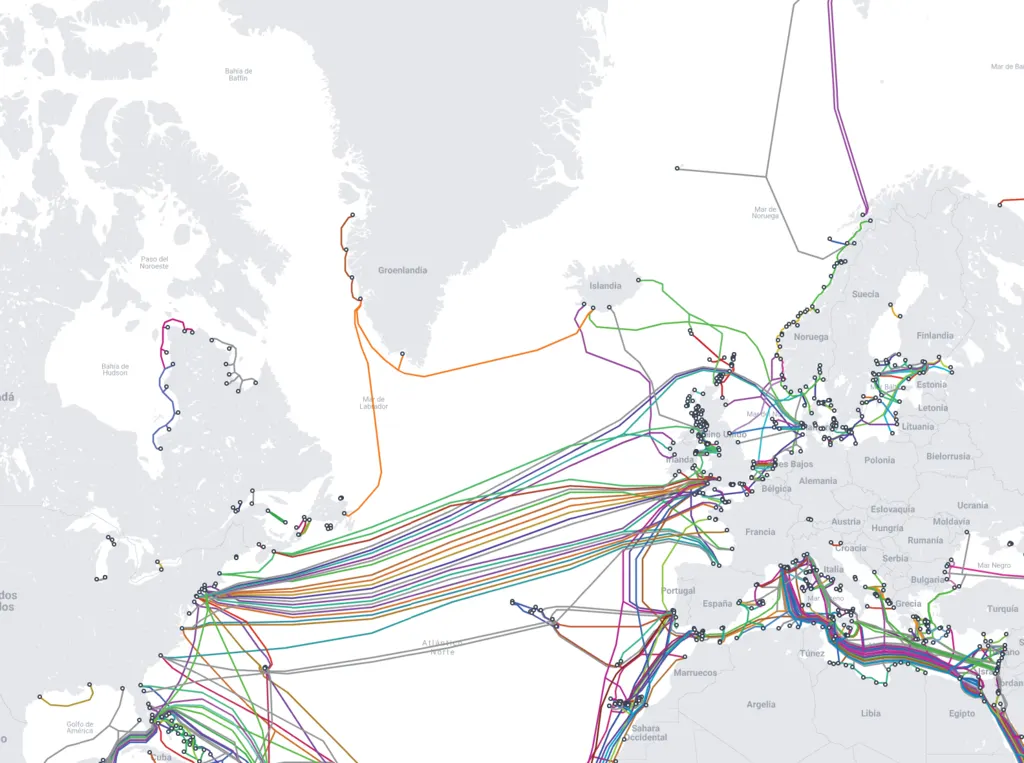
The European Commission wants to lay a subsea internet cable that connects Greenland directly to the European Union. Plans also foresee extending it through Canada to Japan and South Korea. Called the Pan-Arctic Cable, the project is part of the EU's strategic ambitions in the Arctic and a way to harden the bloc's security.
Why Europe is moving now
More than 99% of global internet traffic travels through subsea cables, from financial transactions to cloud services. Europe's exposure is growing on several fronts. Most traffic between Europe and Asia crosses the Red Sea, where Houthi attacks on shipping have raised the risk to cables. In the Baltic Sea, ships dragging anchors have cut lines. And strained relations with Washington make dependence on US-controlled infrastructure less comfortable.
The Commission's document backs "a sovereign, secure and resilient subsea cable connection linking Greenland directly to the EU." The EU says it has already committed 107 million euros to Greenland's connectivity. The project grew out of a 2025 agreement between European companies, research bodies and a Greenlandic telecom operator, and is now expected to receive support through the Connecting Europe programme.
The plan also includes an Arctic cable hub open to EU members, Norway and Iceland. It would monitor and protect cables in the North Atlantic and Arctic and help with repairs. Brussels also says it will fund cables with "smart technologies" that act as early-warning systems.
Politics more than commerce
Elisabeth Braw of the Atlantic Council says geopolitics played almost no role in past decades and that more cables linking friendly countries while avoiding unfriendly waters should be expected. She adds that five years ago the Greenland project would not have been commercially attractive.
The strategy arrives weeks after the US, Denmark and Greenland signed a security agreement that keeps Greenland's autonomy within Denmark while expanding US military access. Jo Inge Bekkevold of the Norwegian Institute for Defence Studies sees the strategy as aimed more at building ties with Greenland, in response to US policy, than at countering China, which appears only once in the document.
Open questions
The text sets no final route, budget or construction timetable, and does not say who will pay for, own or operate the cable. Working in Arctic waters requires specialised vessels, and the proposal even mentions nuclear power as a way to drive the effort in extreme conditions.
The Asian leg faces hurdles too. Juha Saunavaara of Hokkaido University says Tokyo treats cable building as a private-sector matter, and Japan's investments in Russian hydrocarbon projects could complicate cooperation. Meanwhile, Polar Connect, led by Nordic research institutions, aims to link northern Europe with Japan and South Korea by 2031, and the commercial Far North Fiber project is studying routes. Norway's Bulk Infrastructure is seeking partners for a Europe–Canada cable called Leif Erikson.
Apps worth a look
 SUMO: the number puzzle
Tap the right tiles, add them up, hit the target. Easy to learn, hard to master. Free, for all ages.
 Dialo: learn languages by speaking
Talk to an AI conversation partner; every sentence comes back corrected and explained in your language. 9 languages, A1 to C2.
 ediviewer: read EDI files like documents
Open EDIFACT and X12 messages, see every segment explained, convert to JSON/XML, export PDF and Excel. Runs locally, no upload.
More from this day
See all →
Evertrue Capital launches $17M pre-seed fund for European AI

Oman's Mamun raises $3m to support Gulf-Asia trade with AI

Tencent Cloud unveils MAGIC AI, WAND and TCE AI Suite in Singapore

ElevenLabs CEO Eyes IPO Preparations in 2028, Adds Voice Detector
More in: Business
See all →
KakaoBank Eyes Cards and Brokerage, Plans 2028 Business Banking
T map Sale to Goldman Sachs Cannot Send User Data Abroad
Reddit Tests In-App Search Ads as Google Traffic Declines