Ena care robot: Enactic's humanoid helper folds laundry for Japan
Tokyo startup Enactic is building Ena, a humanoid care assistant that folds laundry and watches over residents at night. Launch is planned for 2028.
 SUMO· the number puzzle
 Dialo· learn languages by speaking
 ediviewer· read EDI files like documents
 giftdetect· the right gift in minutes
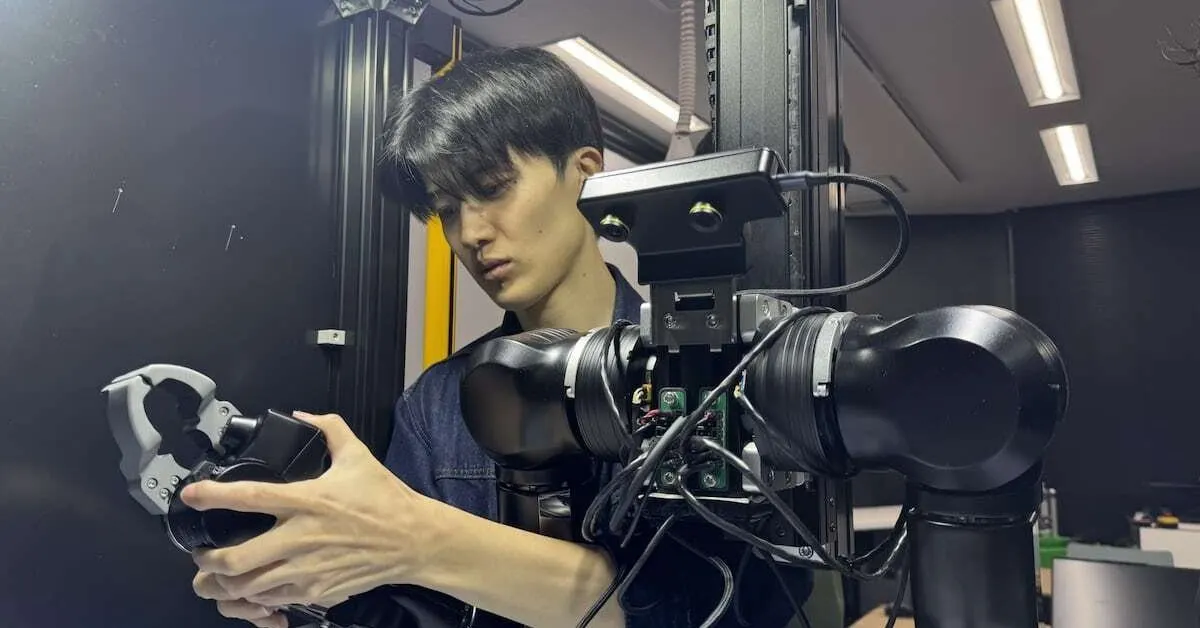
A robot arm pulls clothes out of a laundry net and folds them, one piece at a time, with movements smooth enough to look almost human. That is the prototype hand of Ena, a humanoid care assistant that Tokyo startup Enactic is developing for nursing homes in Japan.
The arm was being tested in October at the company's research facility in Chiyoda, Tokyo. It can also be operated remotely. According to engineer Naoto Mori, the arm passes the force it senses straight back to the person controlling it, so the operator can feel what the robot touches.
Ena is meant to take over the side jobs: cleaning rooms, doing laundry and keeping watch at night. Those tasks are said to make up about 30% of work in care facilities. The idea is that human staff can concentrate on bathing, toileting and helping residents move. Launch is planned for 2028. Engineer Yusuke Toki says the team is teaching the robot's AI the shapes of doors and slopes typical of care homes so it moves correctly.
Why is Japan's care sector short of staff?
By fiscal 2040, when about 35% of the population will be 65 or older, Japan's health ministry estimates it will need roughly 2.72 million care workers. That is about 570,000 more than in fiscal 2022. Fewer young people are entering the field, and pay is a sore point. The ministry's 2024 wage survey puts average monthly care pay at about 271,000 yen, around 60,000 yen below the all-industry average of about 340,000 yen.
Money is not the only reason people leave. In a 2024 care-work survey, 16.3% of people whose previous job was in care cited low income as a reason for quitting, and 24.7% cited problems with workplace relationships.
A remote monitoring system already in use
Smaller tools are arriving sooner. Technos Japan, a bed-exit sensor maker in Himeji, Hyogo, built a system called e-Live. A sensor under the mattress detects movement, and staff see on a phone or PC whether a resident is awake, out of bed or absent. Camera video is available too, so staff only visit when needed. At facilities that adopted it, room visits were reportedly halved and falls dropped by 20%.
Apps worth a look
SUMO: the number puzzleTap the right tiles, add them up, hit the target. Easy to learn, hard to master. Free, for all ages.
Dialo: learn languages by speakingTalk to an AI conversation partner; every sentence comes back corrected and explained in your language. 9 languages, A1 to C2.
ediviewer: read EDI files like documentsOpen EDIFACT and X12 messages, see every segment explained, convert to JSON/XML, export PDF and Excel. Runs locally, no upload.
giftdetect: the right gift in minutesPick who it is for, the occasion and their personality. The search engine reads product descriptions from local shops and ranks what fits. Free, no sign-up.
More from this day
See all →
Alex Karp calls Palantir 'progressive', after years of 'anti-woke' talk

Cybertruck ending: Tesla's loudest fans turn on Elon Musk
Docomo 5G SA outage hits again, 9 hours offline, same cause
Palworld developers get official time off to play GTA VI
More in: Hardware
See all →
Anthropic moved Claude to AMD chips in three days, almost no humans

MacBook Pro screen complaints: eye strain, headaches and nausea

Magnetic tape is back: Fujifilm to make 5x more LTO tape for AI