Cowboy Space Unveils Big Iron, a Rocket That Becomes an AI Data Center
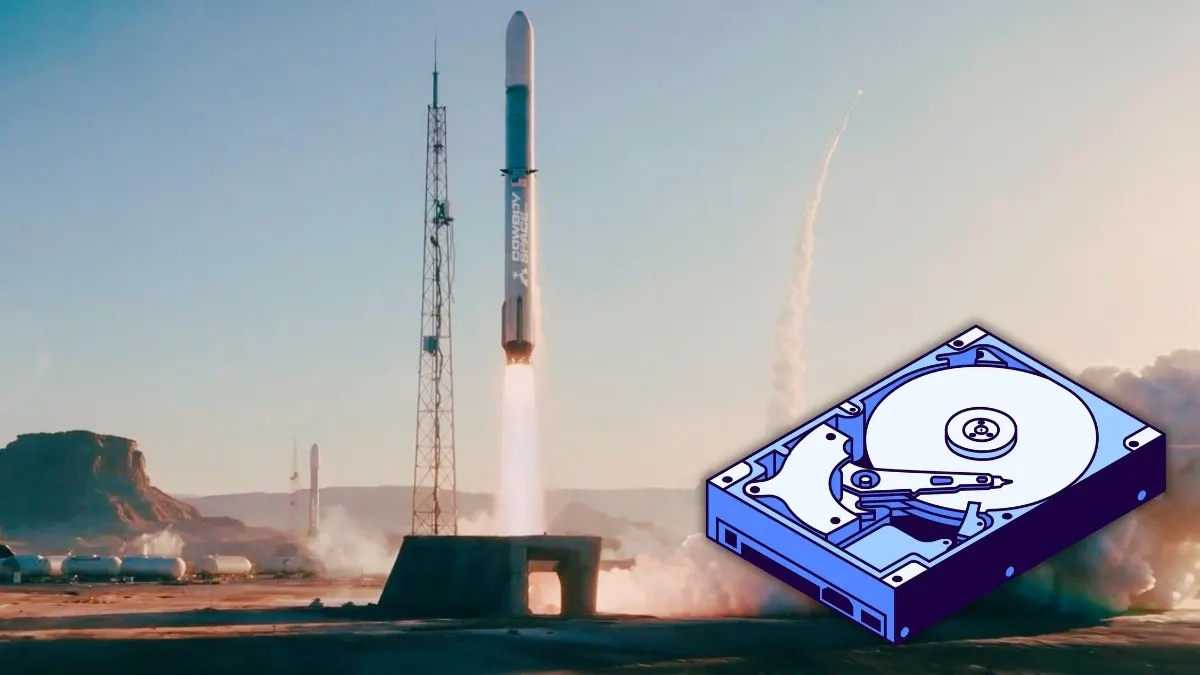
Cowboy Space has revealed Big Iron, an 86-metre rocket whose second stage stays in orbit as an AI data center. The first flight is planned for December 2028.
 SUMO· the number puzzle
 Dialo· learn languages by speaking
 ediviewer· read EDI files like documents
 giftdetect· the right gift in minutes
US company Cowboy Space has presented Big Iron, an 86-metre rocket designed to turn its own second stage into an AI data center in orbit. Instead of being discarded, the upper stage will stay in space as a working server facility. The company's first flight is scheduled for the end of 2028.
A rocket built from stainless steel
According to details shown at the Big Sky Rising event, Big Iron is a two-stage stainless steel vehicle 4.7 metres in diameter, able to lift more than 15 tonnes to a sun-synchronous orbit. Its parts are meant to be transportable by road, which should cut production and infrastructure costs.
The first stage will use nine Clydesdale engines burning liquid methane and oxygen, each producing about 1.33 MN of thrust. The second stage gets a single engine of the same family. The layout resembles Falcon 9, as does the plan to recover the first stage, which Cowboy Space says could land on an offshore platform. A combustion chamber test of the Clydesdale has already been carried out at NASA's Stennis Space Center.
The upper stage is the satellite
Once in orbit, the second stage will unfold solar panels and a radiator system, growing to roughly 132 by 73 metres. Inside will sit five racks of NVIDIA Vera Rubin chips, with around 1 MW of power for computing. The hull and shields are meant to double as radiators, ammonia will help carry away heat, and the nitrogen used to pressurise tanks will deploy the solar panels. Cooling remains a major challenge, since in a vacuum heat can only be shed by radiation.
Big Iron is meant mainly for the Stampede constellation of up to 20,000 data-center satellites in low Earth orbit. As each second stage becomes its own unit, that would require at least 20,000 launches, with several per day from sites called Trailheads. Launch locations and a detailed schedule have not been announced, and an application has been filed with the US Federal Communications Commission. A service called Big Iron Express would also launch third-party payloads.
What comes next
Cowboy Space, formerly Aetherflux, put its first satellite, Reason-1, into orbit in October to test beaming power to Earth by laser. Reason-2, planned for 2027, will carry GPUs for commercial and government customers. Founder Baiju Bhatt admits the December 2028 date for Big Iron is not guaranteed. Only real flights will show whether combining rocket and data center delivers the promised savings.
Apps worth a look
SUMO: the number puzzleTap the right tiles, add them up, hit the target. Easy to learn, hard to master. Free, for all ages.
Dialo: learn languages by speakingTalk to an AI conversation partner; every sentence comes back corrected and explained in your language. 9 languages, A1 to C2.
ediviewer: read EDI files like documentsOpen EDIFACT and X12 messages, see every segment explained, convert to JSON/XML, export PDF and Excel. Runs locally, no upload.
giftdetect: the right gift in minutesPick who it is for, the occasion and their personality. The search engine reads product descriptions from local shops and ranks what fits. Free, no sign-up.
More from this day
See all →
Calogena wins €40 million EU grant for first commercial SMR
Windows 11 Registry Editor Gets a WinUI 3 Version as a Demo

JRH ASI to Finance Radar System Production for Ukrainian Partner
Budimex Tests Autonomous Rollers as Poland's Labor Shortage Bites
More in: Space
See all →
Innospace Sets Nov. 29 Relaunch of SEBIT Rocket in Brazil
Rakuten and AST SpaceMobile Form Rakuten AST for Japan's J-LEO
NASA Opens Astronaut Applications for Artemis Moon Base Missions