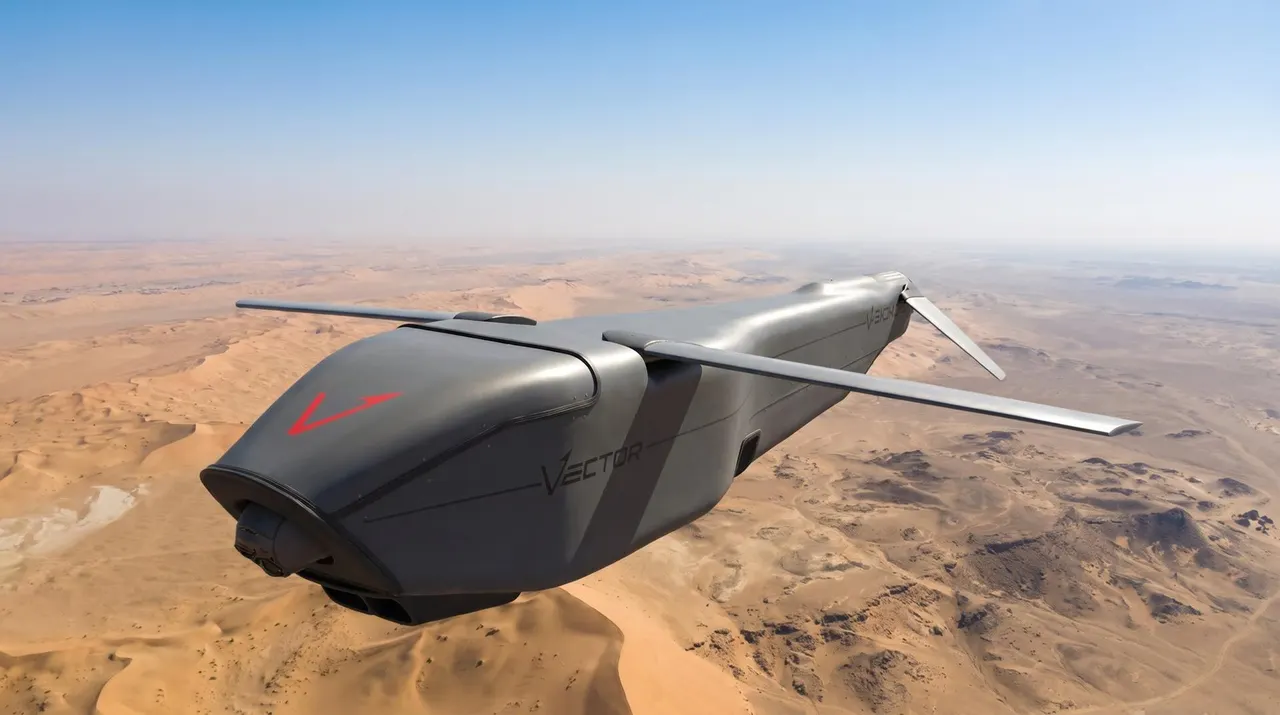
BOMBARD drone revives the V-1 pulsejet for a 1,100 km range
US startup Vector says its BOMBARD kamikaze drone flies 1,100 km on a pulsejet, the engine type behind Germany's WWII V-1. The pitch is cheap mass production.
 SUMO· the number puzzle
 Dialo· learn languages by speaking
 ediviewer· read EDI files like documents
 giftdetect· the right gift in minutes
The engine type that powered Germany's V-1 flying bombs is back, this time on the BOMBARD drone from US company Vector. It is loud, it shakes itself half to pieces and it burns plenty of fuel. Vector is betting that none of that matters if you can build thousands of them.
Vector showed BOMBARD on 19 November 2026 at the Axios Future of Defense Summit. It is a ground-launched kamikaze drone with a claimed range of up to 1,100 km, a cruise speed of 378 km/h, a maximum takeoff weight of about 127 kg and a 50 kg payload. The idea is to hit distant targets without spending a far costlier cruise missile.
How does the BOMBARD pulsejet engine work?
A pulsejet has no compressor or turbine, unlike a normal turbojet. It makes thrust by burning fuel and air in repeated cycles, which keeps the design simple. Vector also says the engine can run on different fuels, though it gave no details.
The V-1 used a similar engine, the Argus As 014. It flew at around 600 km/h, carried a warhead of roughly 850 kg and reached about 240 to 250 km. BOMBARD claims more than four times the range with a much smaller load. Note that the 50 kg is payload, not necessarily explosive, and it is unclear whether 1,100 km is possible with a full load.
Why use an old engine design?
Pulsejets are not a forgotten idea. Similar engines have turned up in the Scitor-D drone and Wave Engine's J-1. Their appeal is simplicity and potentially low cost. Their drawbacks are vibration, noise and fuel use on long flights. The V-1 also needed a launch ramp to get up to speed, and Vector has not said how BOMBARD takes off.
At 378 km/h it is slower than Iran's Hadid-110, said to reach about 510 km/h. It should still be much faster than propeller-driven Shahed drones, which gives air defences less time. But a loud engine and hot exhaust can make it easier to spot.
What is still missing
Vector says BOMBARD will fly autonomously from launch to impact, even with GPS jamming, and will have a modular payload and Open C2 command-system integration. The company has existed only since 2024, and its chief, Andy Yakulis, said one variant has flown. No full test results have been shown.
Vector also plans production in Saudi Arabia, where a joint venture called SR2Vector would build it as SKYWASP. There is still no unit price, production volume or delivery date, and those are the numbers that decide whether the cheap-weapon claim holds up.
Apps worth a look
SUMO: the number puzzleTap the right tiles, add them up, hit the target. Easy to learn, hard to master. Free, for all ages.
Dialo: learn languages by speakingTalk to an AI conversation partner; every sentence comes back corrected and explained in your language. 9 languages, A1 to C2.
ediviewer: read EDI files like documentsOpen EDIFACT and X12 messages, see every segment explained, convert to JSON/XML, export PDF and Excel. Runs locally, no upload.
giftdetect: the right gift in minutesPick who it is for, the occasion and their personality. The search engine reads product descriptions from local shops and ranks what fits. Free, no sign-up.
More from this day
See all →
Naver's Thingsbook hits 1 million downloads without likes

AI swatting: fake voices are now making bomb threats to 911

Melt chocolate: a weight-loss drug sold as a daily chocolate square