bitFlyer Adds Passkey Authentication for Key Crypto Transactions
Japanese exchange bitFlyer has introduced passkey authentication for crypto transfers and yen withdrawals, citing the rise of phishing aimed at financial services.
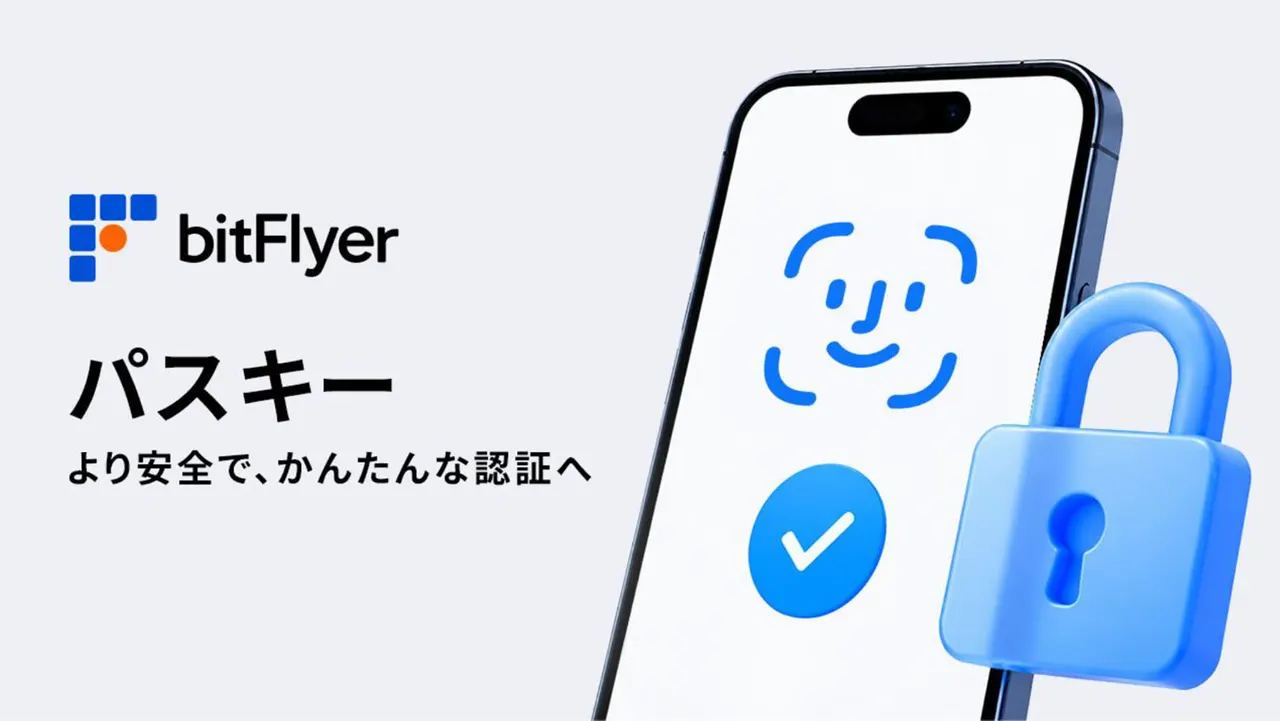
bitFlyer announced on the 29th that it has introduced passkey authentication on its crypto trading service, aiming to counter increasingly sophisticated phishing scams and unauthorized access targeting financial platforms.
According to the company, passkeys resist phishing better than two-factor authentication. They reduce the risk of unauthorized access and illicit transfers caused by stolen credentials, while sparing users the effort of checking and typing in verification codes. bitFlyer says this lets it balance security with convenience.
Which actions require a passkey
Passkey authentication is required for three operations: sending crypto assets to an external address, registering an external destination address, and withdrawing Japanese yen. These are the actions where a compromised account would cause the most direct financial damage.
As of the announcement, passkeys cannot yet be used to log in to the service. Login still relies on the existing methods, so the new protection currently covers only the high-risk steps after a user has signed in.
Part of a wider industry shift
bitFlyer is not the first in the Japanese market. Other crypto services operating in the country, including Binance, Coincheck, GMO Coin, SBI VC Trade and Minna no FX, have already adopted passkey authentication.
For users, the change means that stealing a password and a one-time code is no longer enough to move funds out of an account, because a passkey is tied to the user's device and cannot be handed over on a fake login page in the same way. Users who have not yet set up a passkey will need to do so to carry out the affected operations. The company has not said whether login support will follow.
More from this day
See all →
Startup Equity Explained: How Founders Should Split Ownership

Polish startup ecosystem's worst nightmares: PFR Ventures to TechPL

Ukraine's OBRIA NANO Satellite Tests a Backup to Starlink

NASA Seeks Industry Ideas to Save Hubble From Falling by 2033
More in: Crypto
See all →
VARA Expands PRYPCO License as Dubai Property Tokenization Evolves

Binance Sets Aside $6.34 Billion After Hack Tied to DevOps Laptop
DTCC Launches Tokenization Service for Eligible US Securities