Bill Gates Calls for a Token Tax as AI Replaces Human Workers
Bill Gates says business incentives reward swapping people for machines, and he wants governments to tax AI usage to fund the safety net during the transition.
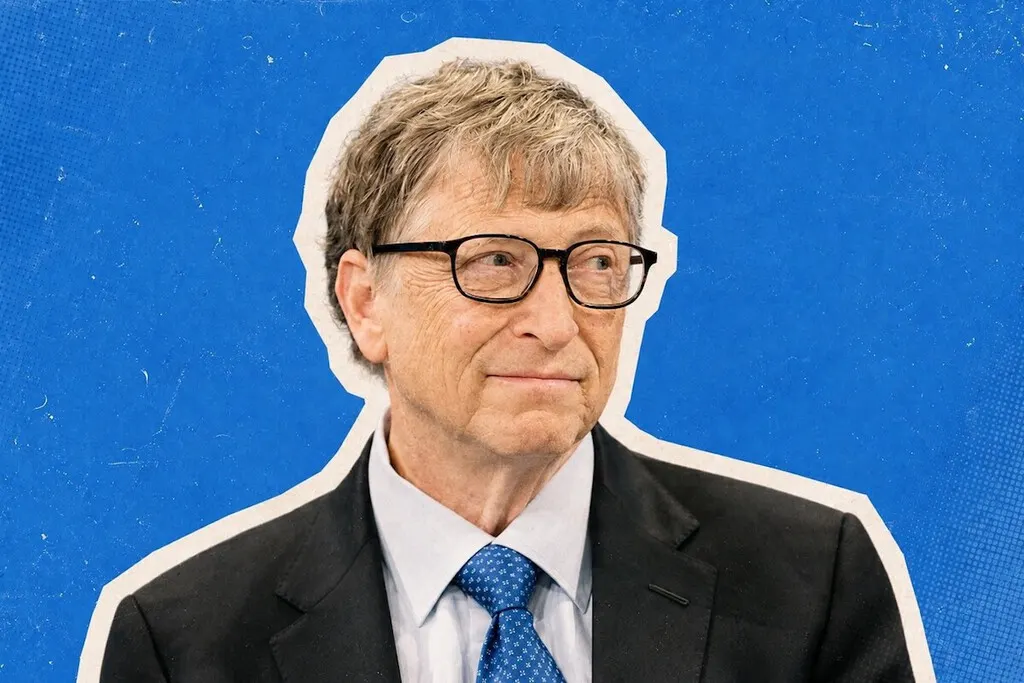
Bill Gates has renewed his call for a "token tax" on artificial intelligence, arguing that today's incentives push companies to replace people with machines. In an interview with The Observer, the Microsoft co-founder said the prevailing logic is "to hire the robot, fire the human and not look back".
Gates describes AI as an evolutionary event that ends humanity's place as the smartest thing on the planet. He expects AI to take over almost every job skill, starting with invention and office work and, once humanoid robots mature, moving on to the trades. Earlier this year he warned that the labor-market shift would be "very turbulent" and that society is not prepared.
Why a tax on tokens
His reasoning is simple: employers pay payroll tax on the people they hire, so the same should apply to the AI tokens and robots used in production. In practice the opposite happens, since buying a robot can be deducted as an expense. Gates says public revenue that funds benefits will fall during the transition even if overall prosperity rises, so governments will need new sources to pay for unemployed workers, future education and retraining.
He also wants billionaires to pay more. According to the interview, he has paid around $14 billion in taxes over his life and would have accepted paying $40 billion. He urges governments to tax large fortunes in a way that feels fair, while admitting that this will not close the gap between spending and revenue in many rich countries. On the risks of advanced AI, he lists bioterrorism and cyberattacks as immediate threats, and loss of human control as a possibility by the late 2020s. He asks the US and China to cooperate on what he calls a "challenge for humanity".
Early signs and a contrast at Microsoft
There are already signals in the job market. A Stanford study found that workers aged 22 to 25 in highly AI-exposed occupations have 19% less employment than expected.
Microsoft offers an awkward contrast. The company has reportedly signaled that around 60,000 employees, 27% of staff at its offices in the US, Canada, India and the UK, are surplus, and has proposed a voluntary exit plan for level 70 and below. In April it launched a voluntary retirement program for about 8,750 eligible US employees, and in July it announced nearly 5,000 layoffs. Meanwhile it spent $41 billion on capital investment in its latest fiscal quarter, largely on AI.
More from this day
See all →
LG Display Takes Sole Ownership of 9 US OLED Patents From LT Materials

Galaxy Z Fold9 Ultra Rumors: 200MP Camera, Snapdragon Chip

Samsung Executives Meet OpenAI's Sam Altman on AI Strategy