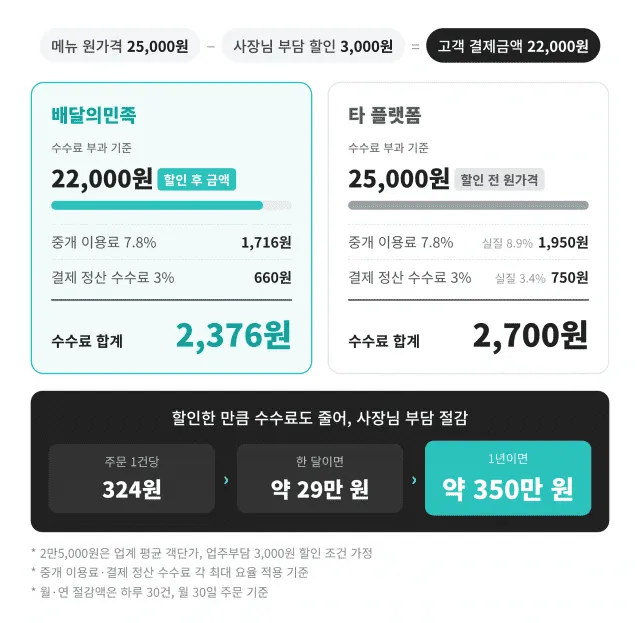
Baemin fine: Korea's FTC says it pushed shops toward own delivery
Korea's competition regulator fined Baemin's operator for sidelining restaurant-run delivery. Industry voices say the ruling could push platforms to drop that model.

 SUMO· the number puzzle
 Dialo· learn languages by speaking
 ediviewer· read EDI files like documents
 giftdetect· the right gift in minutes
South Korea's Fair Trade Commission has fined Woowa Brothers, the company behind the Baemin food delivery app, for deliberately disadvantaging restaurant-run delivery to push shops toward the platform's own couriers. The decision, announced on 9 November, has already started an argument about what it means for the delivery business.
The regulator found that while Woowa expanded its own delivery service (known in the industry as OD), it treated the older shop delivery model (MP) unfairly and effectively forced restaurant owners to switch. In MP, the app only takes the order and the restaurant delivers the food itself. In OD, the platform handles the delivery too.
Why is the Baemin ruling controversial?
Industry figures argue the market has moved to OD almost everywhere. In the US, DoorDash and Uber Eats handle more than 90% of orders through their own delivery. The top two players in China, India and Indonesia do the same, and leaders in Taiwan and Singapore run 100% OD. Grubhub, founded in 2004 and built around MP, lost the top spot to DoorDash and has effectively been pushed out of the market. In Korea, Coupang Eats is also 100% OD.
The worry is about who gets punished. At a briefing, the FTC said both models have strengths and weaknesses, and that a natural shift to OD is not something it can object to if fee terms are fair. One industry source reads that differently: a platform running both models may be penalised for strengthening the more popular one, so dropping MP could be the safer choice.
Industry sources also dispute the FTC's view that OD is more profitable. They say it needs heavy spending on riders, IT systems and customer service, so margins per order are well below MP.
What would dropping MP mean?
MP still matters in rural areas, where riders are scarce and customers and restaurants are spread out. Coupang Eats has skipped or left some such regions for that reason. Supporters of OD also point to quality: a Korea Consumer Agency survey covering 2017 to 2021 found delivery problems such as wrong or missing orders made up 33.6% of complaints, the largest share.
Apps worth a look
SUMO: the number puzzleTap the right tiles, add them up, hit the target. Easy to learn, hard to master. Free, for all ages.
Dialo: learn languages by speakingTalk to an AI conversation partner; every sentence comes back corrected and explained in your language. 9 languages, A1 to C2.
ediviewer: read EDI files like documentsOpen EDIFACT and X12 messages, see every segment explained, convert to JSON/XML, export PDF and Excel. Runs locally, no upload.
giftdetect: the right gift in minutesPick who it is for, the occasion and their personality. The search engine reads product descriptions from local shops and ranks what fits. Free, no sign-up.
More from this day
See all →
Tesla driver asleep on Ottawa's Highway 417 charged by OPP

Nāpōwawāʻenakaulua: Webb Finds Earliest Quasar Pair Ever

United Airlines AI agent ban: bots can't tick the check-in box

Jensen Huang resigns as Nvidia CEO; Colette Kress steps in as interim
More in: Business
See all →
United Airlines moves to block AI agents from booking flights

AI rebounding: 1 in 5 US workers replaced by AI were asked back
Lyft lawsuit: DOJ seeks $53M over riders with disabilities