AI in physics: TheoPhysEval was maxed out before release
Suvrat Raju built a test of day-long physics problems for AI. GPT-6 Astra got 49 of 50 right, for under $3 each, and sometimes caught the humans' mistakes.
 SUMO· the number puzzle
 Dialo· learn languages by speaking
 ediviewer· read EDI files like documents
 giftdetect· the right gift in minutes
Suvrat Raju built a benchmark of hard physics problems for AI, and the AI finished it before he could publish. He didn't sleep well for a couple of nights.
Raju, a theoretical physicist at the International Centre for Theoretical Sciences in Bengaluru, started about six months ago. He asked a frontier AI model about a problem he had solved but never published, so the model couldn't have memorized the answer from the Internet. It got the answer wrong, but did better than he expected. So he and a colleague asked other physicists for unpublished results, the kind of problem that takes a top human about a day.
The benchmark is called TheoPhysEval. At a September colloquium, Raju showed that leading models solved about 60 percent of the problems alone. By the time the full set was done, GPT-6 Astra solved nearly 90 percent. Then the team gave Astra the human solutions and asked where it had gone wrong. Astra argued the humans were wrong, and it was right. In the end it answered 49 of 50 correctly, and the one miss was something of a trick question. Each correct answer cost under $3 of compute on average and needed a single prompt.
There won't be a second version. "We've kind of hit the ceiling of well-defined calculations that people can do," Raju said.
How are physicists using AI?
Heavily. In October, a Turkish physicist said on X that Claude Opus 5.5 reproduced the core of his PhD thesis in 10 hours. It had cost him a year and 500 pages of hand calculation. Ed Witten has credited Opus in recent papers, and Juan Maldacena thanked OpenAI models on two papers this year.
Andreas Karch at the University of Texas at Austin runs agents around the clock and sends one of his old papers through Astra each day to hunt for errors. Matthew Schwartz at Harvard counted 20 sessions running on his machine, each with 10 to 20 agents. Anthropic gave him the tokens. Karch's ChatGPT subscription is free from OpenAI.
Is the flood of papers a problem?
Possibly. From January to October, submissions to arXiv's hep-th (high-energy theory) category rose about 30 percent over last year. The biggest yearly jump in the previous two decades was 8 percent. Schwartz called many of the papers "poorly written, but I think the science is probably pretty solid." Nobody has time to check.
Not everyone's work is mostly calculation. MIT's Daniel Harlow says most of his job is "figuring out what to do," and by the time he has a calculation, he's 95 percent done. For him, AI is useful for catching up on neighboring fields, not a category change.
Apps worth a look
SUMO: the number puzzleTap the right tiles, add them up, hit the target. Easy to learn, hard to master. Free, for all ages.
Dialo: learn languages by speakingTalk to an AI conversation partner; every sentence comes back corrected and explained in your language. 9 languages, A1 to C2.
ediviewer: read EDI files like documentsOpen EDIFACT and X12 messages, see every segment explained, convert to JSON/XML, export PDF and Excel. Runs locally, no upload.
giftdetect: the right gift in minutesPick who it is for, the occasion and their personality. The search engine reads product descriptions from local shops and ranks what fits. Free, no sign-up.
More from this day
See all →
ChatGPT down: OpenAI sees recovery after chat and Codex errors
AI toys for kids: 150 groups tell Amazon and eBay to stop sales
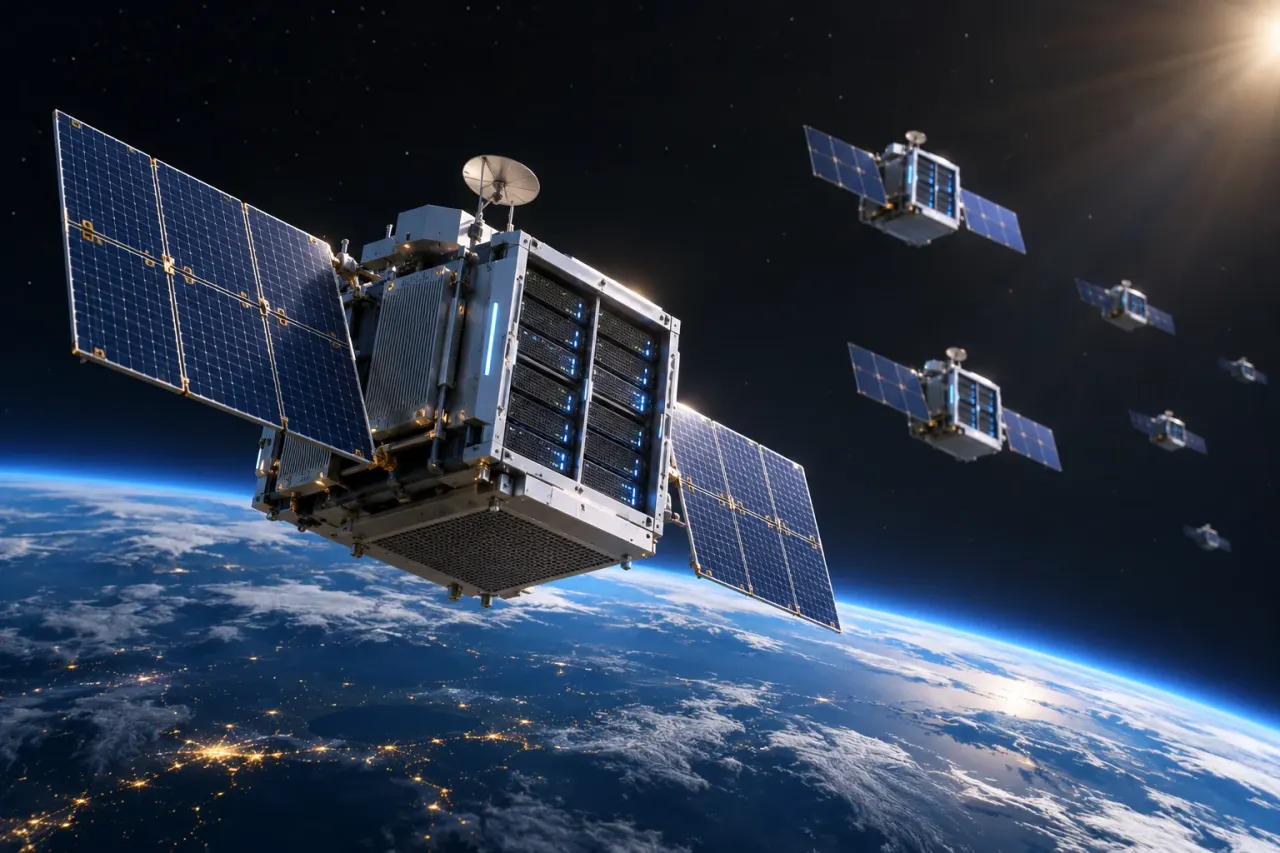
SpaceX Starmind: FCC OKs up to 1 million data-center satellites