AFINIT Wins Patent for Generative AI Loan Screening Method
Korean AI finance firm AFINIT has registered a patent that turns generative AI loan decisions into calibrated default probabilities for lenders' risk management.

 SUMO· the number puzzle
 Dialo· learn languages by speaking
 ediviewer· read EDI files like documents
 giftdetect· the right gift in minutes
Korean AI finance company AFINIT, led by CEO Lee Chul-won, has completed the registration of a patent for core technology that converts generative AI responses into risk indicators for credit screening.
The patent covers a method and computing device that use the log probabilities of loan-screening response tokens to estimate and calibrate default probability. In practice, it turns text answers such as approval or rejection into a quantitative default probability for each customer, adjusted to real financial conditions.
The problem it addresses
Generative AI can interpret structured data such as income and credit scores, as well as unstructured material like financial statements and consultation records, which has made it a promising screening aid. But when a model outputs only the text "approve" or "reject", it cannot distinguish differences in risk among customers who are all approved. Setting loan limits or differentiating interest rates requires a continuous numerical measure of risk.
How it works
According to the company, a screening prompt is built from customer information, and the AI is prompted to answer approve, reject or review. The system then extracts the token log probability, which expresses how likely the model was to generate that word, and converts it into a rejection probability. That value is combined with a lender's historical delinquency data to train a statistical calibration function, separating raw text-generation probability from a customer's actual likelihood of default and producing a final default probability.
Lenders can use the result to sort approvals, rejections and manual reviews, or to set rates and limits by customer. When markets or regulations change, only the lightweight calibration function needs retraining, not the entire generative AI model, which the company says cuts operating cost and time significantly.
Global expansion
The same logic applies abroad. For countries with different languages, legal environments and loan products, the calibration function can be tuned using local delinquency data. Lee said the patent provides a technical foundation for linking qualitative AI answers to quantitative risk metrics, and that AFINIT will use its ability to reflect each country's and lender's standards to speed up its global expansion.
Apps worth a look
SUMO: the number puzzleTap the right tiles, add them up, hit the target. Easy to learn, hard to master. Free, for all ages.
Dialo: learn languages by speakingTalk to an AI conversation partner; every sentence comes back corrected and explained in your language. 9 languages, A1 to C2.
ediviewer: read EDI files like documentsOpen EDIFACT and X12 messages, see every segment explained, convert to JSON/XML, export PDF and Excel. Runs locally, no upload.
giftdetect: the right gift in minutesPick who it is for, the occasion and their personality. The search engine reads product descriptions from local shops and ranks what fits. Free, no sign-up.
More from this day
See all →
Notion AI chats stolen in breach at vendor Fireworks AI

Heal.dev raises €4M for AI agents that hunt app vulnerabilities
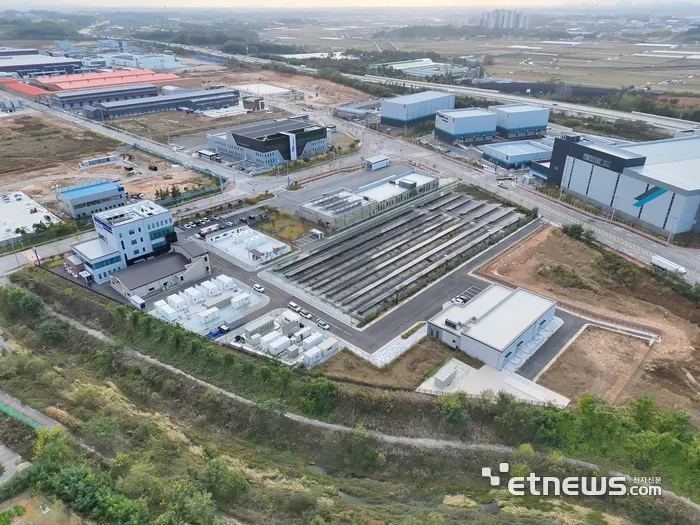
South Korea Builds 1MVA UPS Safety Test Site for Data Centers