Volkswagen to Export China-Built Tech to Latin America, Africa
Volkswagen will ship software, platforms and driver-assist systems developed in China to Latin America and South Africa, with Europe still under internal debate.
 SUMO· the number puzzle
 Dialo· learn languages by speaking
 ediviewer· read EDI files like documents
 giftdetect· the right gift in minutes
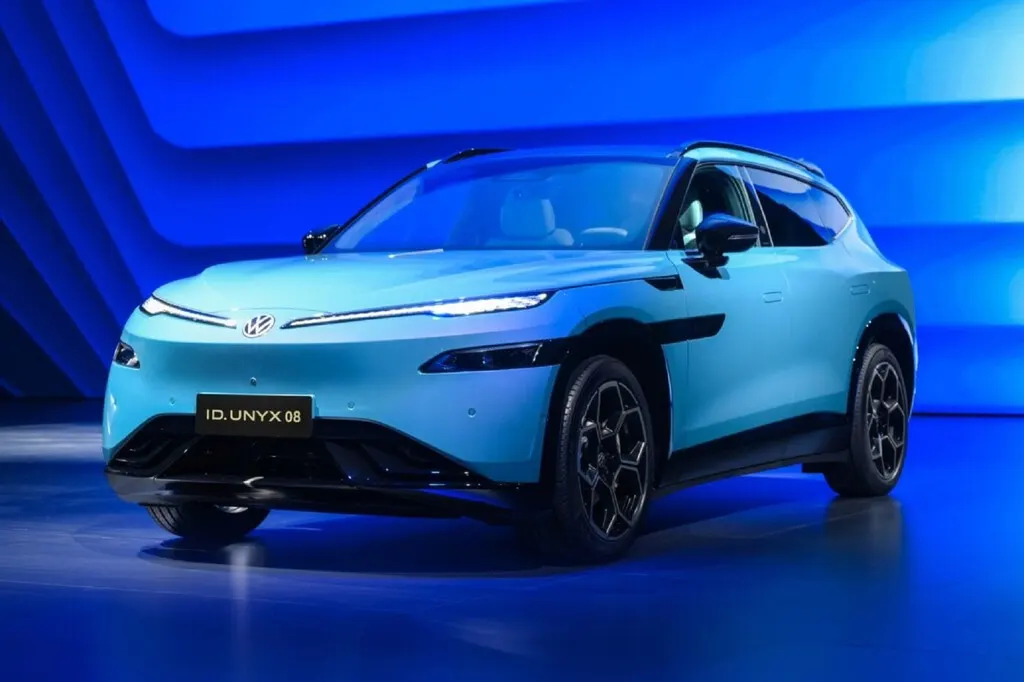
Volkswagen is turning China from a market it builds for into a technology hub it exports from. The company says software, vehicle platforms and driver-assistance systems developed in China will go into cars sold in Latin America and South Africa, while Europe could follow.
CEO Oliver Blume has described the shift as moving from "In China, for China" to "In China, for beyond China". VW is trying to regain ground at home against rivals such as BYD and Geely, which are hard to beat on vehicles, software and price.
What is in the VEGA package
The technology is bundled under the name VEGA and has three main parts. The China MainPlatform (CMP) is an architecture for compact battery-electric and plug-in hybrid cars, targeting more than 600 km of CLTC range and about 11 kWh per 100 km. The China Electronic Architecture (CEA), developed with Xpeng, is the electronic and software backbone for both electric and combustion cars. HyperSense8 is a driver-assistance system built by VW's Carizon and Horizon Robotics, reportedly heading to seven new electrified VW models this year.
For premium models, VW has the China Scalable Platform (CSP), an 850-volt architecture that could charge from 10% to 80% in 13 minutes.
Rollout and the Europe question
Latin America comes first, with local production of CMP- and CEA-based models planned for 2030, followed by South Africa. VW is also sending more China-built cars abroad, to the Middle East, Uzbekistan, Kazakhstan and sub-Saharan Africa, with Mexico, Egypt and Vietnam joining by the end of 2026. It aims to export at least 300,000 vehicles a year from China by 2030.
Officially, Europe and North America are ruled out for now. Still, VW is reportedly studying whether CEA could underpin future commercial vehicles for VW, Skoda and Cupra in Europe, a decision that rests with headquarters in Germany. Such a move could sideline Rivian, the US software partner VW committed about $5.8 billion to.
The push is also a cost play: VW is in its biggest restructuring in decades, and its China chief expects the Chinese passenger car market to shrink 20% this year to about 4.5 million vehicles. The first model co-developed with Xpeng had a weak debut, making the export plan a test of whether the China reset can produce cars people want.
Next, VW plans CEA in China-built plug-in hybrid and combustion models in 2027, along with Level 3 automated driving, and Level 4 in 2029 using CEA 3.0 and its own C7H chip. It targets 30 China-developed new-energy models by the end of 2027 and over 50 new products by 2030.
Apps worth a look
SUMO: the number puzzleTap the right tiles, add them up, hit the target. Easy to learn, hard to master. Free, for all ages.
Dialo: learn languages by speakingTalk to an AI conversation partner; every sentence comes back corrected and explained in your language. 9 languages, A1 to C2.
ediviewer: read EDI files like documentsOpen EDIFACT and X12 messages, see every segment explained, convert to JSON/XML, export PDF and Excel. Runs locally, no upload.
giftdetect: the right gift in minutesPick who it is for, the occasion and their personality. The search engine reads product descriptions from local shops and ranks what fits. Free, no sign-up.
More from this day
See all →


More in: Automotive
See all →
NHTSA Probes Whether Waymo's School Bus Recall Actually Worked
XPeng G6 and G9 Electric SUVs Go on Sale in Russia With Yandex
Mercedes MB.Drive Assist Pro Wants Hands on the Wheel in Cities