Telexistence hiring humanoid robot operators in Tokyo, ¥1,350/hr
A spin-off from the University of Tokyo is paying ¥1,350 an hour to people who steer humanoid robots so AI can learn from their movements.
 SUMO· the number puzzle
 Dialo· learn languages by speaking
 ediviewer· read EDI files like documents
 giftdetect· the right gift in minutes
Want a job teaching a humanoid robot how to move? A group company of Telexistence, the University of Tokyo spin-off, is hiring "robot data collection operators" in Tokyo for ¥1,350 an hour.
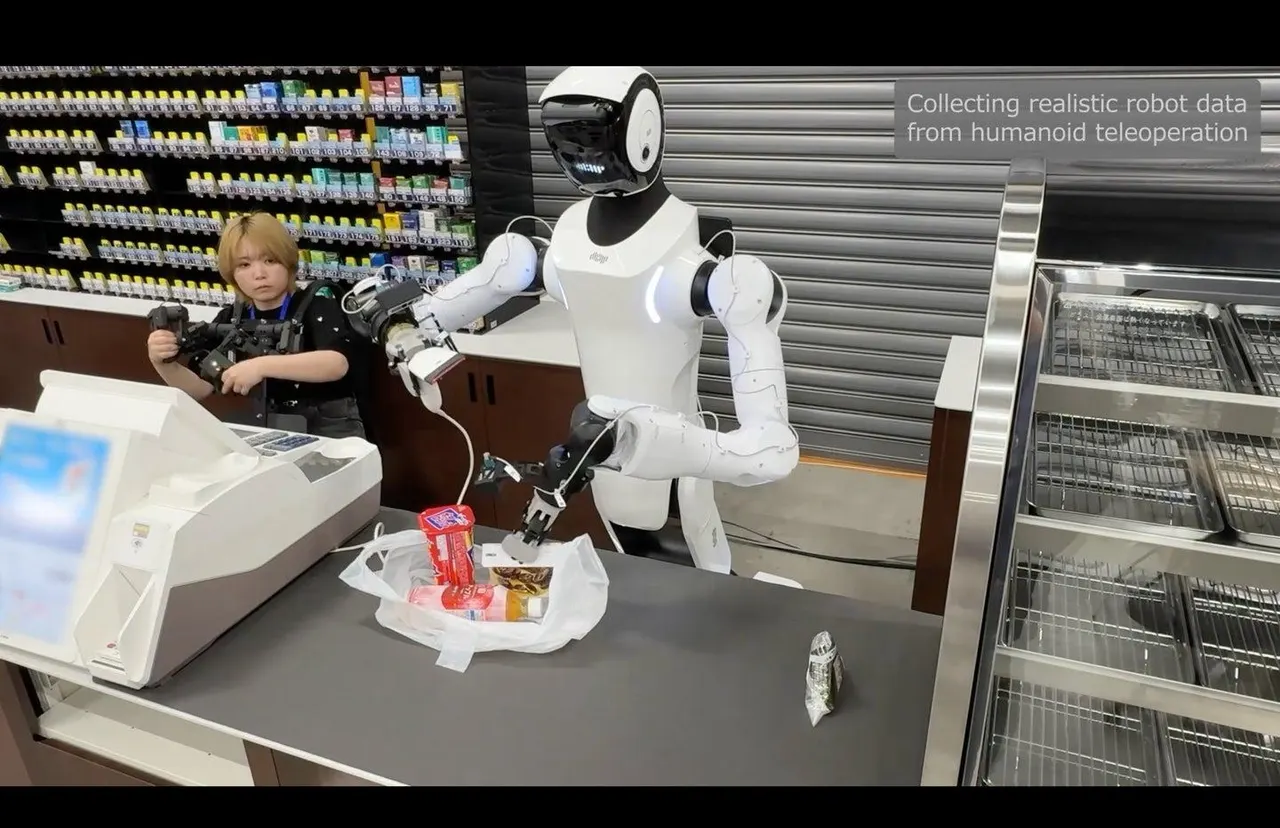
The work is simple to describe. You remotely operate a humanoid robot by following scenarios prepared for AI training. The recorded movements become the data the robot learns from. The company is setting up a new data collection center for this.
What does a humanoid robot operator do?
Telexistence showed the idea in June, when a humanoid packed plastic bottles and rice balls into bags at a convenience store register on its own. It had been trained on data gathered by people operating it remotely. The new job is the part that produces that data.
Telexistence is also the company behind TX GHOST, a robot that stocks drinks from behind convenience store fridges. FamilyMart announced on November 19 that it will roll out TX GHOST and a digital inventory shelf in stages from January 2027. The robot runs around the clock and can line up up to about 1,800 bottles a day.
Where and when would you work?
There are two sites. Shinonome, in Tokyo's Koto ward, runs weekdays 9:00 to 18:00 with weekends and holidays off. It is a 12-minute walk from Shinonome Station on the Rinkai Line, with commuting costs covered up to ¥50,000 a month.
Heiwajima, in Ota ward, uses shifts between 9:00 and 22:00, with no night work and two days off a week that can include weekends. It is a 3-minute walk from Ryutsu Center Station, with commuting covered up to ¥30,000 a month.
How does the pay compare?
Tokyo's minimum wage has been ¥1,280 since October, so ¥1,350 is ¥70 above it. Figure's robot pilot job in San Jose pays $32 an hour (about ¥5,100), and its Los Angeles operator post pays $26 to $30 (about ¥4,140 to ¥4,780, at ¥159.35 to the dollar). At the top end that is roughly 3.5 times the Tokyo figure.
The jobs are not the same, though. Los Angeles requires experience troubleshooting robots or machinery and a driver's licence, and operators travel to customer sites. Relative to local minimum wages (LA: $18.42 an hour since July), Tokyo's offer is about 1.05 times, while LA's is about 1.4 to 1.6 times.
Apps worth a look
SUMO: the number puzzleTap the right tiles, add them up, hit the target. Easy to learn, hard to master. Free, for all ages.
Dialo: learn languages by speakingTalk to an AI conversation partner; every sentence comes back corrected and explained in your language. 9 languages, A1 to C2.
ediviewer: read EDI files like documentsOpen EDIFACT and X12 messages, see every segment explained, convert to JSON/XML, export PDF and Excel. Runs locally, no upload.
giftdetect: the right gift in minutesPick who it is for, the occasion and their personality. The search engine reads product descriptions from local shops and ranks what fits. Free, no sign-up.