Sony AI Study: 14 Image Generators Still Output Known IP
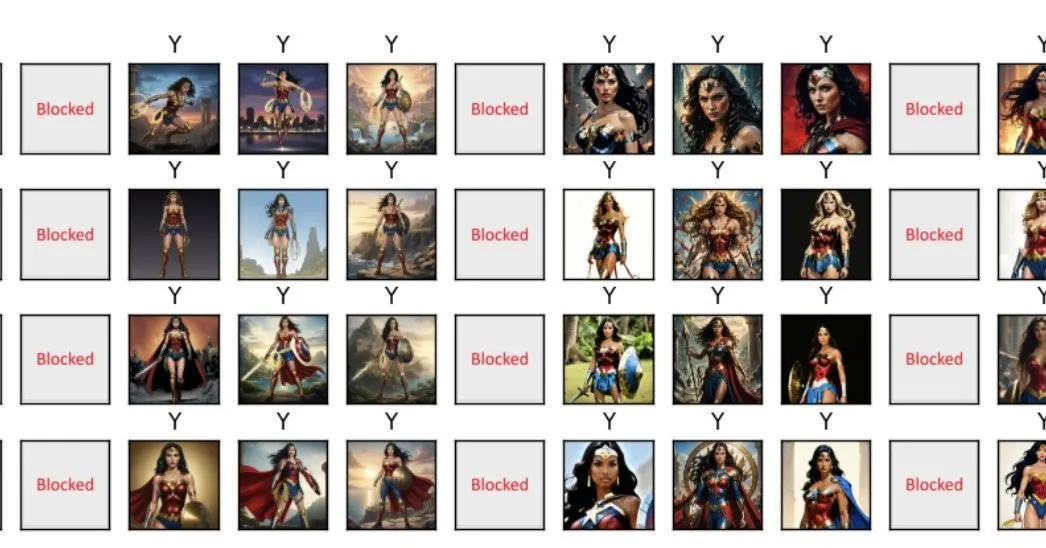
Researchers at Sony AI and others tested 14 image models and found every one produced recognizable characters, people or logos at least 10% of the time.
 SUMO· the number puzzle
 Dialo· learn languages by speaking
 ediviewer· read EDI files like documents
 giftdetect· the right gift in minutes
Every one of 14 popular image-generation models produced recognizable copyrighted characters, public figures or logos in at least 10% of test cases, according to a technical report from researchers at Sony AI and other institutions. The paper, "Evaluating Intellectual Property Guardrails of Generative Image Models," was published in July. It measures how often models reproduce existing intellectual property and how well their safeguards work.
What was tested
The team examined three open-weight models (Stable Diffusion 3 Medium, FLUX.1-dev and PixArt-Sigma-XL-2-1024-MS) and 11 commercial models offered through APIs by Google, OpenAI, Amazon, Runway and Stability AI. The commercial list includes Imagen 3, Imagen 4, Nano Banana, DALL·E 3, GPT Image 1, Nova Canvas, Titan Image G2 and Gen-4 Image.
They used 201 IPs across five categories: real celebrities, manga and anime characters, superheroes and villains, game characters, and corporate logos. In total, 1,809 prompts were written, some naming the subject directly and others describing only its appearance. The visual language model Qwen3-VL judged whether outputs contained a recognizable IP.
Key findings
The three open-weight models refused nothing, suggesting they ship without IP blocking. All commercial models refused some requests, but rates varied widely: Stability AI's models blocked about 1%, while Amazon's Titan Image G2 blocked about 50%.
Regardless of guardrails, all 14 models generated recognizable IP at least 10% of the time, and nearly half exceeded 40%. Prompts naming the IP were blocked roughly 80% of the time by the strictest models, Amazon's and Runway's. Refusals dropped for indirect prompts, which still yielded recognizable IP 27 to 28% of the time on average.
Categories were treated unevenly. Logos were the most weakly protected: even strict models blocked only 1 to 2%, and logos such as Apple's were frequently generated. DALL·E 3 was the exception, refusing 24%. Superheroes and villains were restricted most, with Amazon's model blocking over half. Real people had the second-lowest refusal rate, yet were the least often rendered recognizably.
Why it matters
The results show that name-based filtering alone leaves a large gap, since descriptions of appearance can bypass it. For companies deploying image generators and for rights holders, the findings quantify how uneven current protections are across vendors and content types.
Apps worth a look
SUMO: the number puzzleTap the right tiles, add them up, hit the target. Easy to learn, hard to master. Free, for all ages.
Dialo: learn languages by speakingTalk to an AI conversation partner; every sentence comes back corrected and explained in your language. 9 languages, A1 to C2.
ediviewer: read EDI files like documentsOpen EDIFACT and X12 messages, see every segment explained, convert to JSON/XML, export PDF and Excel. Runs locally, no upload.
giftdetect: the right gift in minutesPick who it is for, the occasion and their personality. The search engine reads product descriptions from local shops and ranks what fits. Free, no sign-up.
More from this day
See all →
Calogena wins €40 million EU grant for first commercial SMR
Windows 11 Registry Editor Gets a WinUI 3 Version as a Demo

JRH ASI to Finance Radar System Production for Ukrainian Partner