SLAB: Palmer Luckey's secret offshore platform built to last 1,000 years
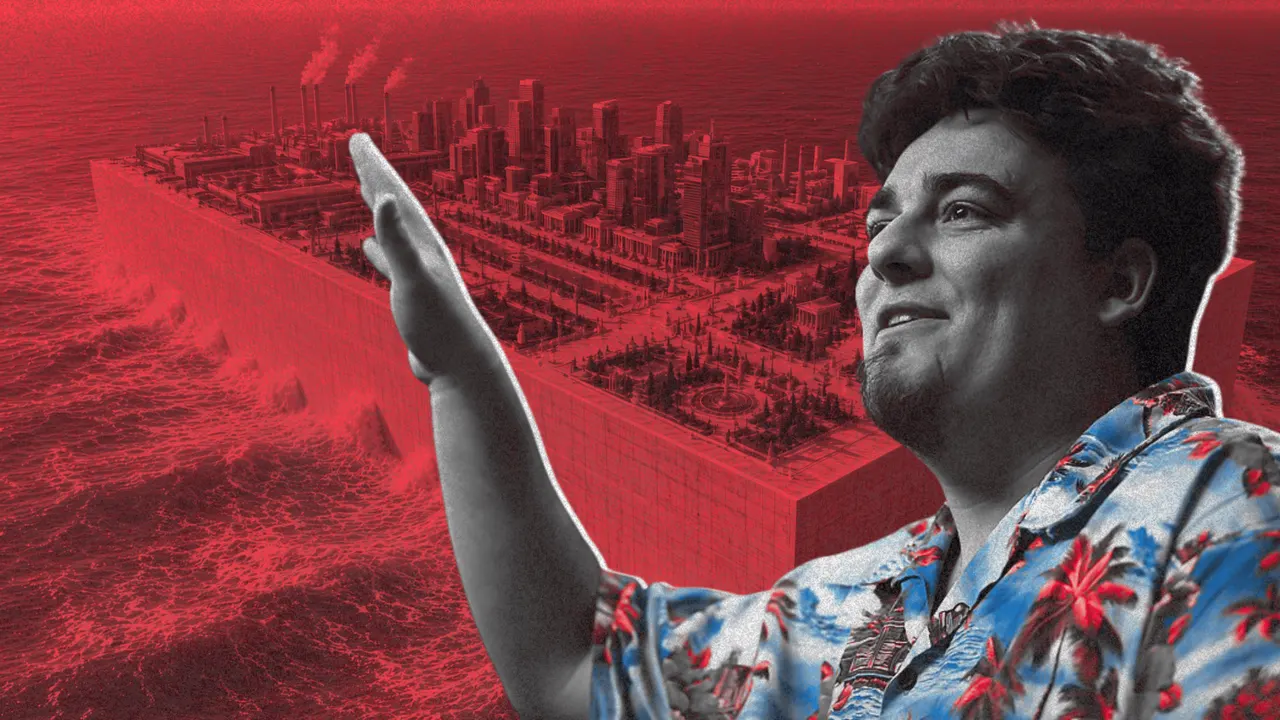
Oculus founder Palmer Luckey says he has quietly funded SLAB for over 10 years: an industrial platform at sea meant to outlast us all and dodge local rules.
 SUMO· the number puzzle
 Dialo· learn languages by speaking
 ediviewer· read EDI files like documents
 giftdetect· the right gift in minutes
Palmer Luckey has been paying for a platform in the middle of the ocean for more than a decade, and he only said so because journalists were about to. The Oculus founder revealed SLAB in a long post on X overnight on 17 to 18 November 2026.
Luckey sold Oculus, the company behind the Rift VR headset, to Facebook in 2014 for $2 billion. In 2017 he co-founded Anduril, which makes drones and autonomous weapons and has become a heavyweight of US defence. He says the Oculus money paid for helicopter lessons, and for a "seastead": a permanent structure at sea. This one is designed to last 1,000 years.
What is SLAB?
Not a floating city. SLAB is meant to host heavy industry: metal processing, medical research and treatments, seawater desalination, oil refining and chemical engineering. The goal, Luckey writes, is to be "cheaper than land" and to escape state and local laws that he says "paralyse" key American sectors. He later took aim at US medical regulation in follow-up posts.
Details are thin. He gives no location, size or stage of construction, only "significant progress" and "a long way to go". He claims the project was already valued at $1 billion in 2017, backed by a few unnamed friends.
Why now, and what rules could it avoid?
Luckey says reporters had heard about a new funding round and were about to call SLAB his floating AI data centre. It is "way cooler than that," he wrote. The guess was not silly: Panthalassa raised $140 million in May 2026 for wave-powered floating data centres.
Seasteading is not new. The Seasteading Institute, first backed by Peter Thiel, pitched floating cities in 2008. Luckey distances himself from it, saying SLAB is built to make America stronger.
He targets state and local law, not federal law. Coastal states generally control waters up to 3 nautical miles (about 5.6 km), and 9 miles off Texas and Florida's Gulf coast. Beyond that, federal law can still apply to offshore installations. Without a location, nobody can say which rules SLAB would actually escape.
Apps worth a look
SUMO: the number puzzleTap the right tiles, add them up, hit the target. Easy to learn, hard to master. Free, for all ages.
Dialo: learn languages by speakingTalk to an AI conversation partner; every sentence comes back corrected and explained in your language. 9 languages, A1 to C2.
ediviewer: read EDI files like documentsOpen EDIFACT and X12 messages, see every segment explained, convert to JSON/XML, export PDF and Excel. Runs locally, no upload.
giftdetect: the right gift in minutesPick who it is for, the occasion and their personality. The search engine reads product descriptions from local shops and ranks what fits. Free, no sign-up.
More from this day
See all →
German humanoid combat robot to shoot down drones, prototype due

Shenlong spaceplane photographed in orbit with its cargo bay open
Apple outage: iCloud, App Store and Apple Pay hit by problems