Samsung AR glasses lens is just 1.5 mm thick, a third of today's
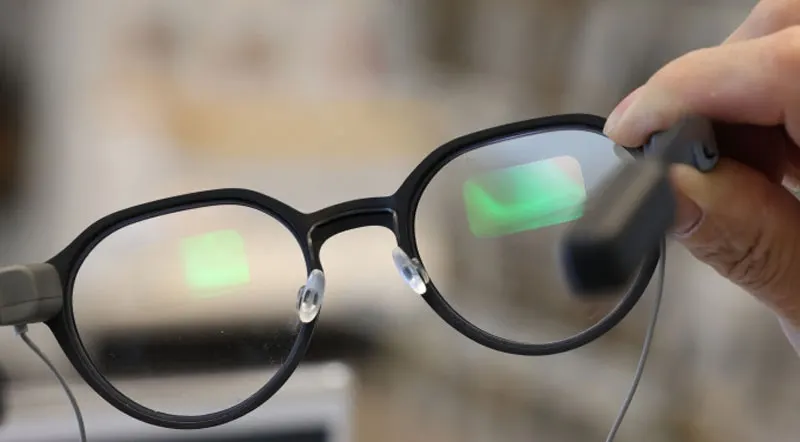
Samsung Research and POSTECH built an AR glasses lens only 1.5 mm thick, about a third of current ones, using a metasurface covered in nanoscale structures.
 SUMO· the number puzzle
 Dialo· learn languages by speaking
 ediviewer· read EDI files like documents
 giftdetect· the right gift in minutes
The heavy part of AR glasses is often the lens, and Samsung now says it can make that lens a lot thinner. Researchers from Samsung Research and South Korea's POSTECH university have built an AR glasses lens just 1.5 mm thick, roughly a third of the lenses in current commercial devices. The work was published in Nature on 11 November 2026.
How does the thin AR lens work?
In most AR glasses, a tiny projector sends light into the lens, where it bounces along inside like a waveguide until it reaches the eye. Some light scatters on the way, so the image gets dimmer, and a bigger lens loses even more.
The team placed a metasurface in the waveguide area. That is a flat layer of nanometre-sized structures, smaller than the wavelength of visible light. Their shape and spacing were tuned so the direction of the light depends on where and at what angle it enters. Less light is lost. For full colour, the researchers stacked two waveguide layers: one carries blue and green, the other red and green.
The result is a brighter image at power consumption comparable to existing devices, according to the researchers. In their prototype, white text stayed readable in bright daylight. Indoors, full-colour images held up even with the display at 30% of its original power.
When will thin AR glasses like this be on sale?
Not yet. This is still a prototype. To get it to market, the team has to reach the same performance with one waveguide layer instead of two. They also need to reduce the rainbow halos and blur that appear when outside light hits the nanostructures.
The developers say they hope to bring glasses with this optics to market within three years. Lighter lenses matter because comfort over a full day depends largely on weight, and the lens is a big part of it.
Apps worth a look
SUMO: the number puzzleTap the right tiles, add them up, hit the target. Easy to learn, hard to master. Free, for all ages.
Dialo: learn languages by speakingTalk to an AI conversation partner; every sentence comes back corrected and explained in your language. 9 languages, A1 to C2.
ediviewer: read EDI files like documentsOpen EDIFACT and X12 messages, see every segment explained, convert to JSON/XML, export PDF and Excel. Runs locally, no upload.
giftdetect: the right gift in minutesPick who it is for, the occasion and their personality. The search engine reads product descriptions from local shops and ranks what fits. Free, no sign-up.
More from this day
See all →
Toyota Scion returns with KEI-01, a right-hand-drive mini truck
Apex Neural Rendering: a DLSS rival that runs on any GPU
Apple Watch 12 and Ultra 4 get sound recognition for noisy rooms