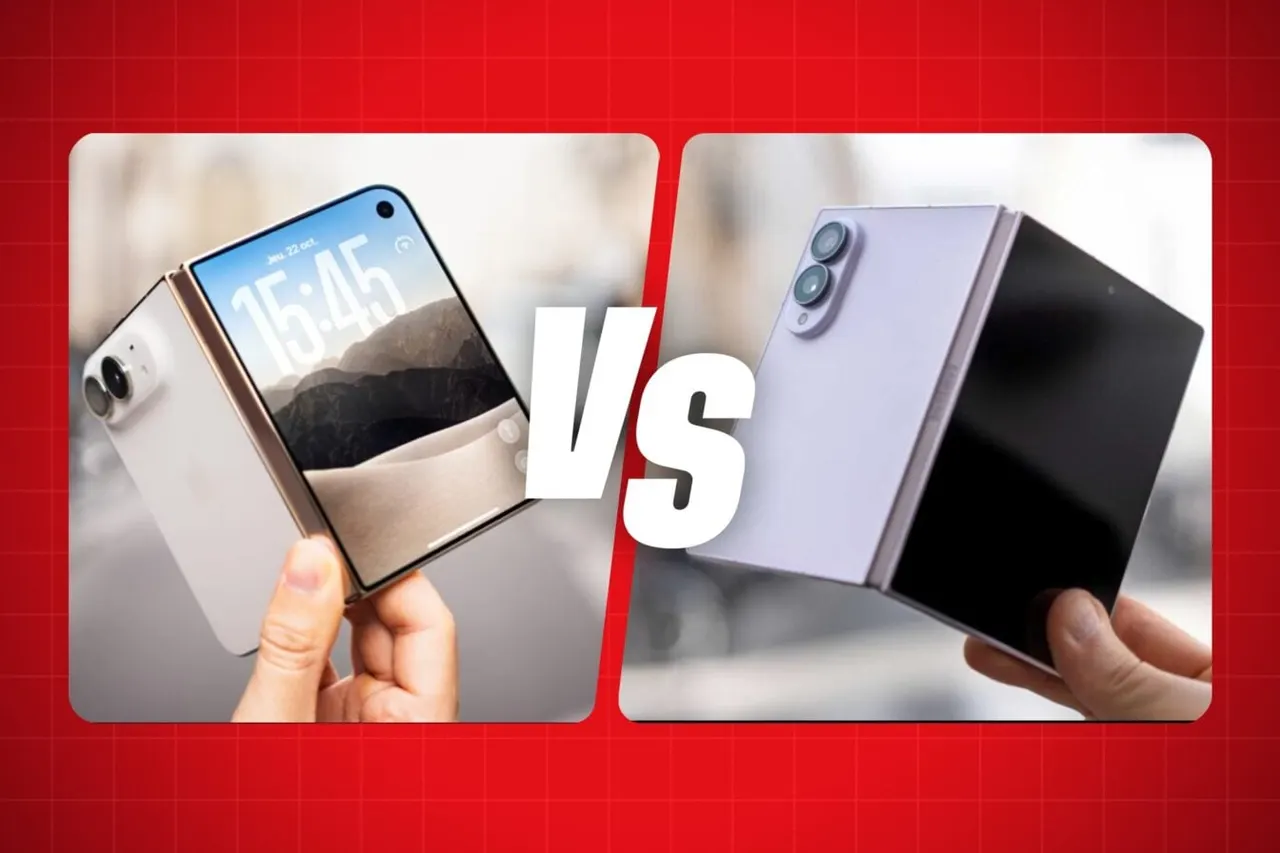
iPhone Duo vs Galaxy Z Fold 8: Apple's Foldable Tested Head to Head
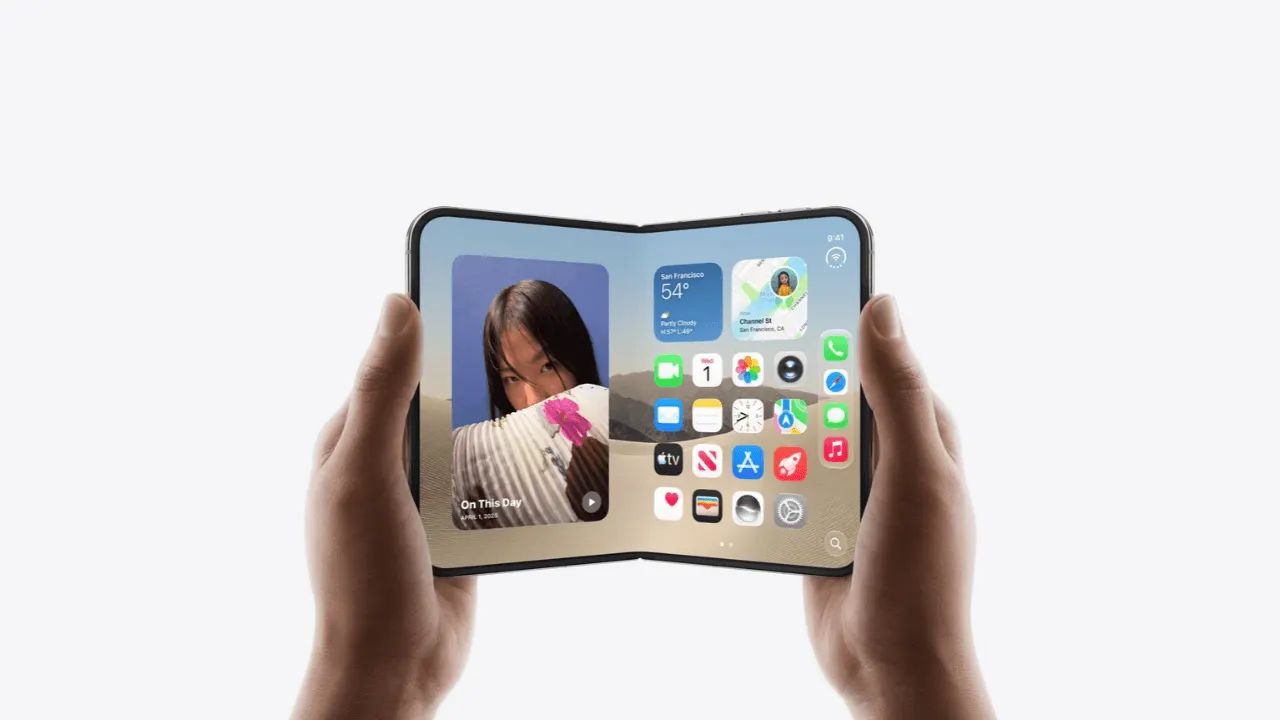
Apple's first foldable beats Samsung's Galaxy Z Fold 8 on screen quality and speed, but software maturity and weight keep the contest extremely tight.
 SUMO· the number puzzle
 Dialo· learn languages by speaking
 ediviewer· read EDI files like documents
 giftdetect· the right gift in minutes
The iPhone Duo, Apple's first foldable, and Samsung's Galaxy Z Fold 8 are separated by the narrowest of margins after a full round of lab and real-world tests. Apple leads on display quality and raw performance, while Samsung answers with lower weight, more mature software and a slight edge in battery life.
Design and displays
Apple has carried the jewel-like finish of the iPhone over to the Duo. Samsung takes a more minimalist route, and its use of titanium makes the Fold 8 comfortable in the hand. The Duo weighs 254 g, roughly 50 g more than the Samsung, a difference that is most noticeable when the phone is closed. The Duo's unfolded screen is a little wider in ratio, whereas the taller Fold 8 panel is better suited to productivity.
On the outside, the Duo uses an asymmetric display with square corners on one side and rounded ones on the other, which crops video content. Apple also applies a matte film to the folding panel that reduces reflections and makes the crease less visible. The inner screen's gloss reading is just 2 GU, against 93 GU for the Fold 8.
In measurements, the Duo's outer screen reaches 815 cd/m² in standard manual brightness versus 494 cd/m² for the Samsung. In HDR it is slightly ahead, with 1,553 cd/m² against 1,468 cd/m². In full sunlight with boost mode, the Fold 8 wins narrowly: 3,014 cd/m² against 2,904 cd/m² outside, and 3,206 cd/m² against 2,807 cd/m² inside. Colour accuracy also favours Apple, with an average Delta E 2000 of 0.8 to 0.9 in sRGB and 1 in DCI-P3, versus 2.6 outside and 2.4 inside for the Fold 8 in P3.
Performance, software and cameras
Apple Silicon is far ahead in every benchmark the testers ran. Software is the Duo's weak point: the iOS version built for it launched unfinished, with numerous bugs, apps not yet updated (YouTube shows an odd asymmetry on the outer screen) and a slow Touch ID. Samsung, backed by years of work with Google on large-screen Android, sees apps adapt well despite the Fold 8's notable change in screen size.
Cameras are hard to separate, with a wide, an ultrawide and two selfie modules on each. The Duo's colours are slightly flattering and its low-light 4x zoom is limited; the Fold 8 is a little duller and closer to reality, with stronger shadows and equally limited zoom. Samsung narrowly wins on battery and charging.
Apps worth a look
SUMO: the number puzzleTap the right tiles, add them up, hit the target. Easy to learn, hard to master. Free, for all ages.
Dialo: learn languages by speakingTalk to an AI conversation partner; every sentence comes back corrected and explained in your language. 9 languages, A1 to C2.
ediviewer: read EDI files like documentsOpen EDIFACT and X12 messages, see every segment explained, convert to JSON/XML, export PDF and Excel. Runs locally, no upload.
giftdetect: the right gift in minutesPick who it is for, the occasion and their personality. The search engine reads product descriptions from local shops and ranks what fits. Free, no sign-up.
More from this day
See all →
Calogena wins €40 million EU grant for first commercial SMR
Windows 11 Registry Editor Gets a WinUI 3 Version as a Demo

JRH ASI to Finance Radar System Production for Ukrainian Partner

Budimex Tests Autonomous Rollers as Poland's Labor Shortage Bites
More in: Mobile
See all →
Android Auto Ends Support for Phones Running Android 9 and 10
Samsung Galaxy AI Premium: Paid Subscription Reportedly in Testing
Apple Says Over 100,000 Apps Now Optimized for iPhone Duo