Dezhurka: Telegram On-Call Tool as Opsgenie Shuts Down in 2027
With Opsgenie support ending on 5 April 2027, a developer has released Dezhurka, an open on-call and escalation service built around Telegram for teams in Russia.
 SUMO· the number puzzle
 Dialo· learn languages by speaking
 ediviewer· read EDI files like documents
 giftdetect· the right gift in minutes
Atlassian stopped new Opsgenie sign-ups in the first quarter of 2026 and set 5 April 2027 as the end-of-support date. On-call features are moving to Jira Service Management, which is closed to many teams in Russia. PagerDuty, incident.io and Rootly are either unavailable there or built around Slack, which few local teams use.
A developer has now released Dezhurka ("Duty Officer"), a small service that sits on top of existing monitoring and answers the question typical setups leave open: who is responsible for an incident right now, and what happens if that person doesn't wake up.
How it works
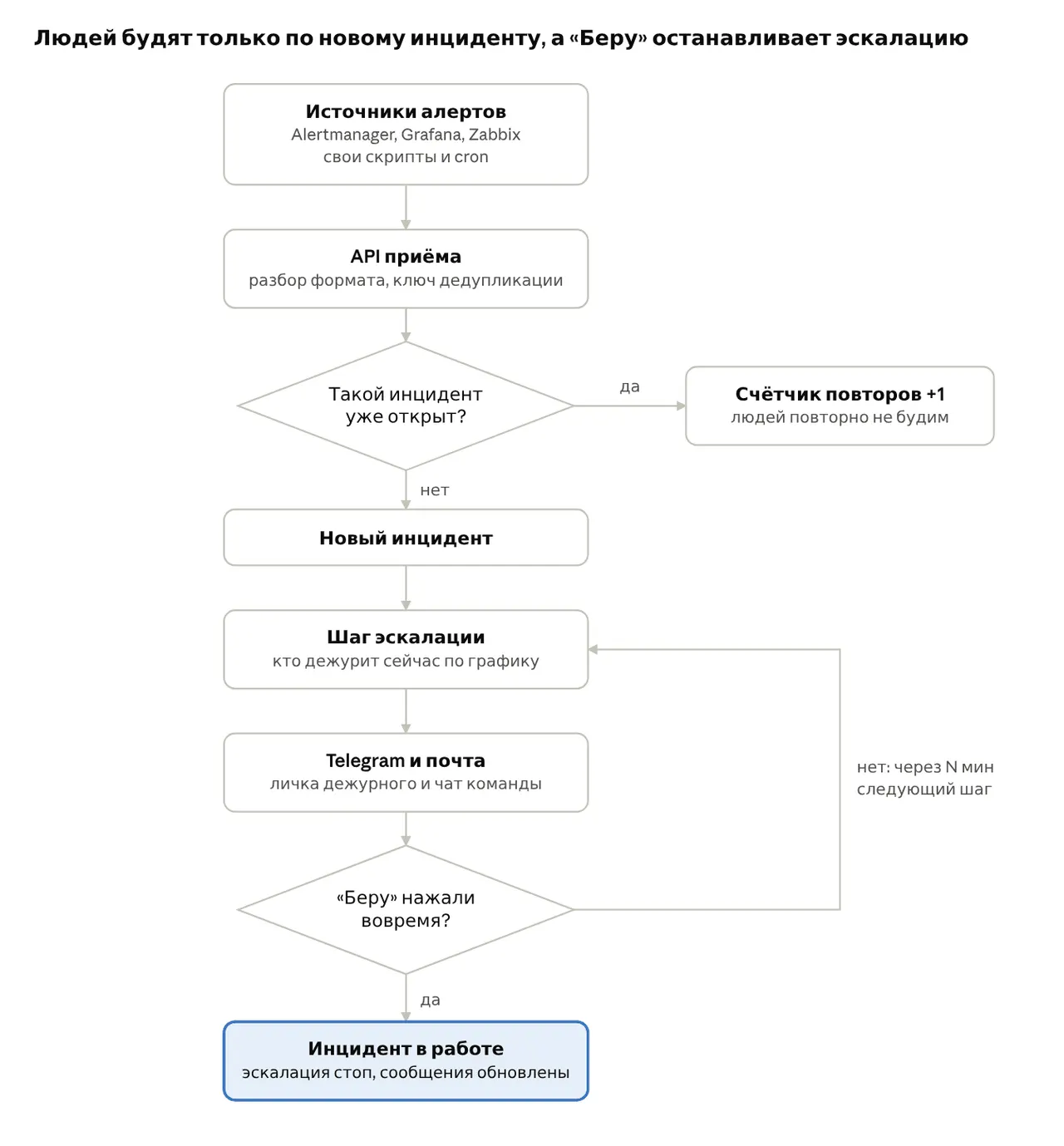
Dezhurka does not replace monitoring. It receives alerts from Prometheus Alertmanager, Grafana Alerting or Zabbix via webhooks, each service having a secret integration key. It checks the schedule, messages the current on-call engineer in Telegram and by email, and duplicates the incident to a team chat. If nobody presses the "Take it" button within 5 minutes, it calls the next person, then the team lead; after two rounds, the timeline records that escalation is exhausted.
Repeated alerts with the same key count as one incident. For Alertmanager the key is the label fingerprint; for Zabbix it is {EVENT.ID}, so problem and recovery are matched. Once someone takes the incident, all Telegram messages are edited to show who is handling it.
Built for closed environments
The bot uses long polling via getUpdates instead of a Telegram webhook, so only outbound access to api.telegram.org is needed, with no public HTTPS endpoint. Only Telegram accounts linked through an HMAC-signed personal link can press buttons. The panel uses Basic authentication and checks Origin on POST forms.
The stack is Python 3.12, FastAPI and SQLAlchemy with SQLite or Postgres, roughly 2,000 lines of code and 24 tests, shipped as one Docker container. Everything runs in a single process with one asyncio.Lock, a deliberate choice to avoid double wake-ups or lost button presses. People, schedules and policies live in a YAML file, with secrets pulled from environment variables. Shift swaps are entered in the panel and override the rotation.
The source is on GitHub, with a one-command demo installer for clean Ubuntu that sets up Dezhurka with Prometheus, Alertmanager, Grafana and optionally Zabbix. The code is open for inspection; terms are in the repository's LICENSE.
Apps worth a look
SUMO: the number puzzleTap the right tiles, add them up, hit the target. Easy to learn, hard to master. Free, for all ages.
Dialo: learn languages by speakingTalk to an AI conversation partner; every sentence comes back corrected and explained in your language. 9 languages, A1 to C2.
ediviewer: read EDI files like documentsOpen EDIFACT and X12 messages, see every segment explained, convert to JSON/XML, export PDF and Excel. Runs locally, no upload.
giftdetect: the right gift in minutesPick who it is for, the occasion and their personality. The search engine reads product descriptions from local shops and ranks what fits. Free, no sign-up.
More from this day
See all →
Ubuntu 26.04 Kernel Update Breaks Containers via AppArmor Change

Flipper One Is Ready for Kickstarter Launch, Starting at $379

Meta pushes emergency update to fix overheating on Meta Glasses