China Telecom Sends 128 Tb/s Through 1,007 km of Hollow-Core Fiber
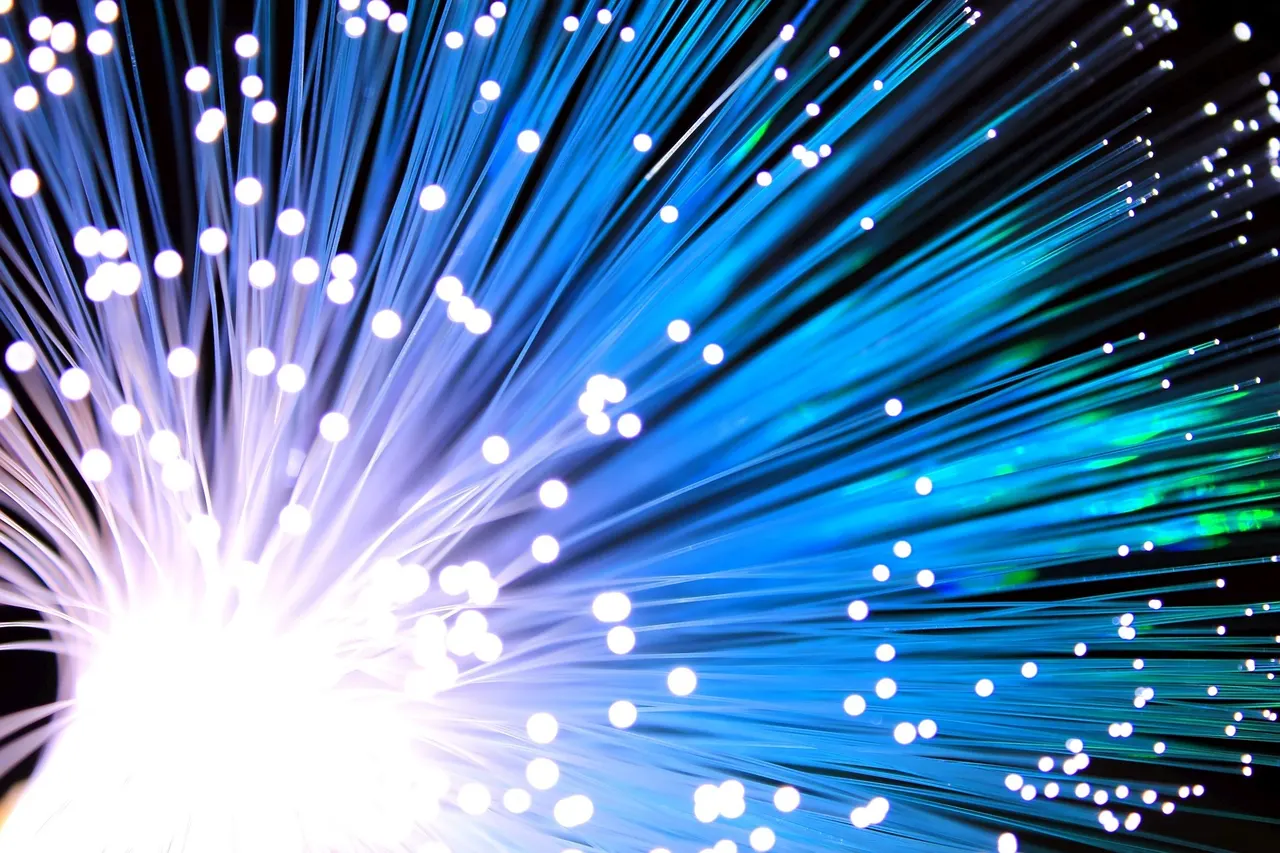
China Telecom, YOFC and ZTE linked over 300 spools of air-core fiber into a 1,007.48 km path and cut signal propagation time by roughly 30 percent versus glass.
 SUMO· the number puzzle
 Dialo· learn languages by speaking
 ediviewer· read EDI files like documents
 giftdetect· the right gift in minutes
China Telecom, fiber maker YOFC and ZTE have joined more than 300 spools of hollow-core fiber into a single 1,007.48 km transmission path. They achieved 64 Tb/s in each direction at once, 128 Tb/s in total, according to the companies.
The key figure is latency. Over roughly 1,000 km, the signal needed just 3.43 milliseconds one way. Light takes about 5 milliseconds over a similar distance in conventional glass fiber, which is where the claimed 30 percent reduction comes from. That covers propagation only, not the full latency of an internet connection.
How it works
Instead of a solid glass core, the fiber has a gas-filled channel. A precisely shaped glass structure around it keeps the light inside, and because the light travels mostly through air, its speed is much closer to that in a vacuum. Nonlinear effects, which limit high-power signals in standard fiber, are also reduced.
The team used commercial optical amplifiers at standard power. Engineers had to limit absorption by carbon dioxide and carbon monoxide in the fiber and control reflections and interference between light modes. A single wavelength carried 800 Gb/s, and the system ran in the extended C and L bands.
Is it a record?
Hollow-core fiber is not new. Microsoft has used it in parts of Azure since 2023, and in 2025 it presented a transmission over 11,154 km. That test used a recirculating loop of about 360 km, though, so the signal passed through it repeatedly. The Chinese team built a physical path of more than 1,000 km with simultaneous two-way transmission in one fiber and no recirculation, so the two experiments test different things.
The companies also claim twice the capacity and a 60 percent longer reach than comparable glass-core fiber, but they gave no precise baseline, so those numbers deserve caution.
Replacing standard fiber across the internet is unlikely soon. Conventional fiber is cheap, durable and easy to splice, while hollow-core must justify its production, installation and maintenance costs. The case is strongest between data centers, where AI clusters depend on fast links. Microsoft is already scaling up production, and the Chinese side reports more than ten pilot and commercial projects.
Apps worth a look
SUMO: the number puzzleTap the right tiles, add them up, hit the target. Easy to learn, hard to master. Free, for all ages.
Dialo: learn languages by speakingTalk to an AI conversation partner; every sentence comes back corrected and explained in your language. 9 languages, A1 to C2.
ediviewer: read EDI files like documentsOpen EDIFACT and X12 messages, see every segment explained, convert to JSON/XML, export PDF and Excel. Runs locally, no upload.
giftdetect: the right gift in minutesPick who it is for, the occasion and their personality. The search engine reads product descriptions from local shops and ranks what fits. Free, no sign-up.
More from this day
See all →
Tesla to End Cybertruck Production in Texas by Mid-2027

Claude Fable 5.2 Builds a Full 3D FPS in 8 Hours From One Prompt

iOS 27.2.1 Fixes Nine Flaws in iMessage, Bluetooth and AirPlay

Mutares sells Stuart to Quiver after three years of losses
More in: Hardware
See all →
Sony Launches AirAuth Spatial Authentication Platform With JR East
FritzOS 8.50 and 8.51 roll out to more Fritzbox routers
Samsung SSD P9 review: fast USB 4 drive at a steep €599