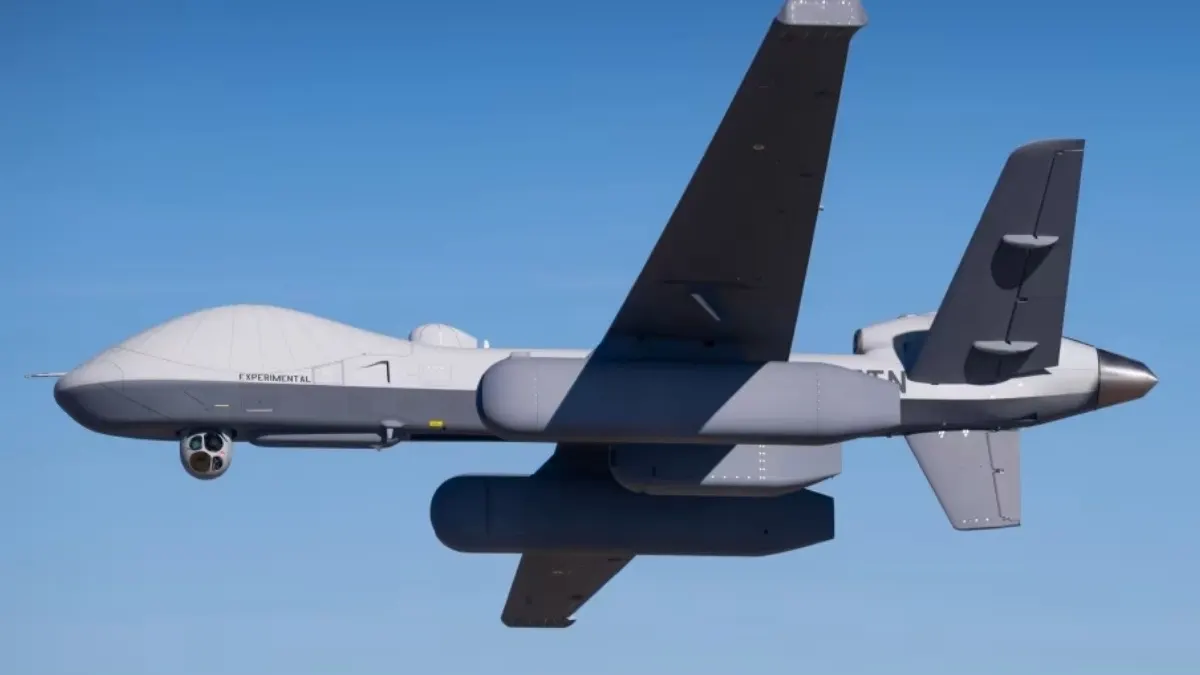
China Says Stealth Drone Flew From Type 076 Ship Sichuan
China says its GJ-21 stealth combat drone has taken off and landed on the amphibious assault ship Sichuan, though no images or video back up the claim.
 SUMO· the number puzzle
 Dialo· learn languages by speaking
 ediviewer· read EDI files like documents
 giftdetect· the right gift in minutes
China says it has launched and recovered a stealth combat drone from the Sichuan, a roughly 40,000-tonne amphibious assault ship. The announcement came from an official account of the People's Liberation Army, which said the GJ-21 completed its first takeoff and landing on board.
There is a major caveat: Chinese authorities have published no images or video, and have not said when the flights happened or how many tests were carried out. Satellite images examined by analysts at The War Zone show the ship left its usual berth in Shanghai for several days in October, but that does not prove the flights took place. For now, the claim rests on the official Chinese account.
A carrier technology on an amphibious ship
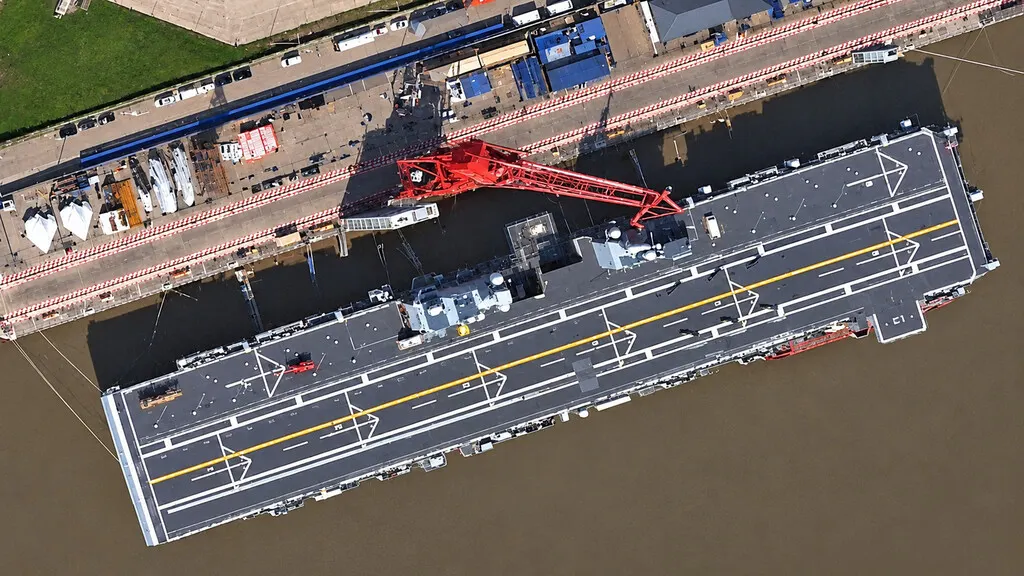
The Sichuan is the first Type 076 amphibious assault ship, hull number 51. Vessels of this kind are traditionally built to carry troops, helicopters and landing craft. The Sichuan adds a large flight deck, a hangar, elevators, an electromagnetic catapult and arresting wires, which allow fixed-wing aircraft to be launched and recovered, a role usually tied to aircraft carriers.
The ship was launched on 27 December 2024 and began sea trials in November 2025. Test vehicles, GJ-21 mock-ups and markings for three arresting wires appeared in imagery over recent months, pointing to gradual preparation for fixed-wing drone operations.
The GJ-21 is a naval variant of the GJ-11 "Mysterious Dragon", a flying-wing unmanned combat aircraft without conventional tail surfaces, designed to reduce its radar signature. The shipborne version has a launch bar on the nose landing gear for catapult use. Its full performance figures are not public.
Why it matters
The significance lies less in rivalling a US supercarrier than in multiplying the platforms from which China can fly combat aircraft. Spreading drones across amphibious ships and carriers such as the Fujian would complicate surveillance, defensive planning and targeting for US forces, especially in a crisis around Taiwan or in the South China Sea.
The US Navy once demonstrated advanced launch and recovery technology for unmanned aircraft but prioritised the MQ-25 Stingray, designed mainly for aerial refuelling. If China turns these trials into routine operations, it could get ahead in fielding shipborne stealth combat drones.
Key questions remain open: how many GJ-21s the Sichuan can carry, how often it can launch them, what weapons they would use and how they would fit into the wider fleet. The announcement shows the direction of China's bet, not proof of sustained combat readiness.
Apps worth a look
SUMO: the number puzzleTap the right tiles, add them up, hit the target. Easy to learn, hard to master. Free, for all ages.
Dialo: learn languages by speakingTalk to an AI conversation partner; every sentence comes back corrected and explained in your language. 9 languages, A1 to C2.
ediviewer: read EDI files like documentsOpen EDIFACT and X12 messages, see every segment explained, convert to JSON/XML, export PDF and Excel. Runs locally, no upload.
giftdetect: the right gift in minutesPick who it is for, the occasion and their personality. The search engine reads product descriptions from local shops and ranks what fits. Free, no sign-up.
More from this day
See all →
Apple Charges $49.99 for Intelligence Usage Packs in Logic Pro

Redalpine closes $250M RAC VIII fund for European startups

Valkyrie Dynamics Raises €1M for Drone Interceptor Radar

Red Hat launches OpenShift 5 with AI troubleshooting tools
More in: Other
See all →
South Korea's Interior Ministry Moves to Publish Public-Sector AI Services

Russia's Interior Ministry Plans Fully Electronic Crime Reports

Poland to build 1.6 billion zloty national data center KCPD