Bikkuri Donkey hamburger robot cooks 180 steaks an hour
Bikkuri Donkey's parent company is testing a robot line that grills hamburger steaks. Each plate takes about 3 minutes, but a new one comes out every 20 seconds.
 SUMO· the number puzzle
 Dialo· learn languages by speaking
 ediviewer· read EDI files like documents
 giftdetect· the right gift in minutes
A robot arm flips a hamburger steak onto a plate, and 20 seconds later another one follows. That is the Bikkuri Donkey hamburger robot system, which visitors could see and eat from at the Food Factory Week show at Tokyo Big Sight.
Aleph, the company behind the Japanese hamburger steak chain Bikkuri Donkey, built a temporary shop at its booth and sold real plates made by the system, which is still in development. Customers order and pay at a cashless register, and the order data goes to each robot line. The menu was limited to four dishes: Regular, Oroshi Shiso, Cheese and Curry.
How does the Bikkuri Donkey hamburger robot work?
One line handles rice and salad. It places the plate, then adds vegetables, dressing, mayonnaise and rice on its own.
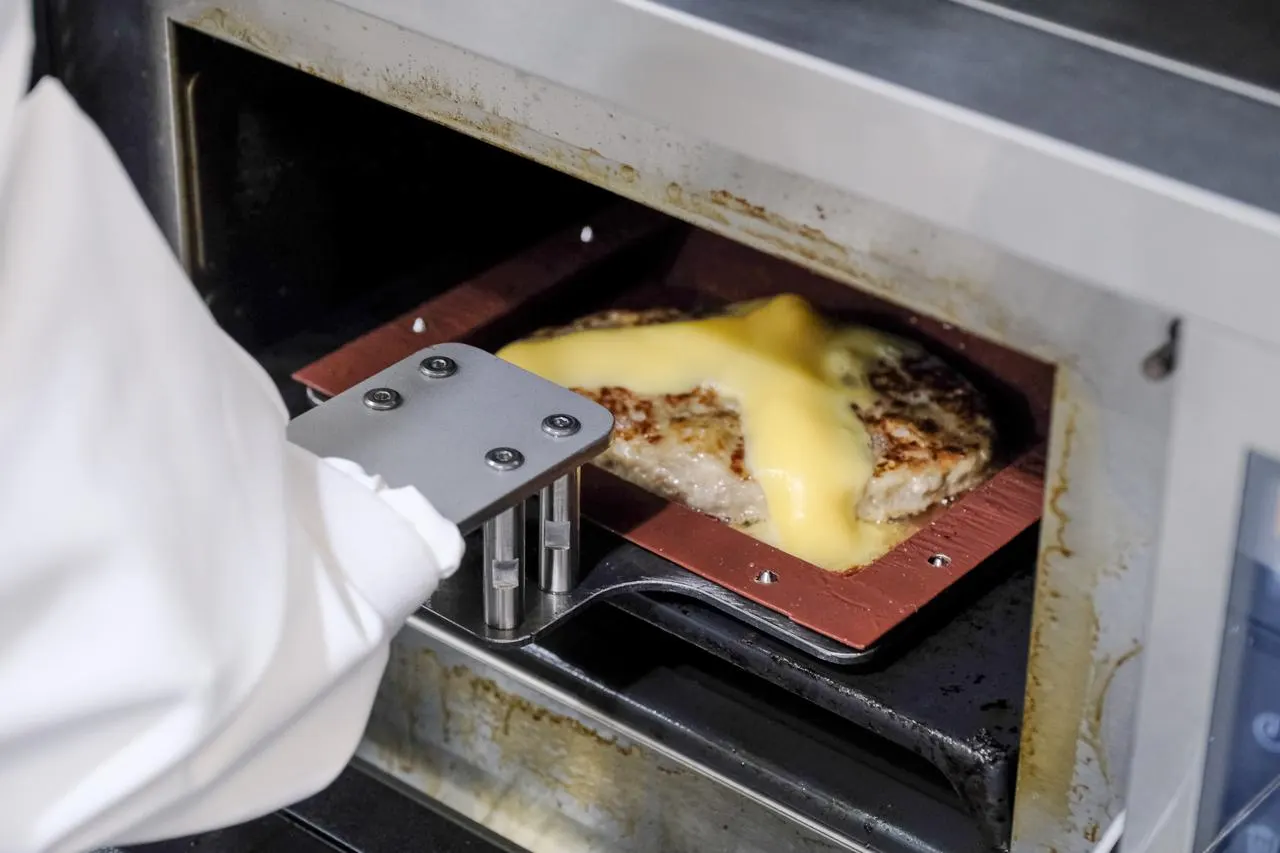
On the hamburger line, a "searing" robot takes a raw patty on its plate from the fridge and sets it on a griddle for 55 seconds. The griddle rotates, and a scraper cleans the cooked surface as it goes round. A "finishing" robot then takes the patty, puts it in an oven that opens automatically, and bakes it for 60 seconds. Finally the arm flips around and slides the patty onto the plate of rice and salad.
A human then checks the dish and adds the sauce or curry.
180 plates an hour, and the famous cheese cross
One plate takes about three minutes from order to finish. Because the line releases the next one every 20 seconds, it can make up to 180 plates an hour. Aleph says it can serve in roughly half the usual time.
One detail mattered a lot: the criss-cross (×) cheese that Bikkuri Donkey's cheese dish is known for. The team added a dedicated cheese station, and the slices are pre-arranged in a V shape and then placed with a time lag.
People still do part of the job. Three staff put sauce on the plates, load them into the locker, restock patties and vegetables, and manage the rice cookers through the day.
Aleph's main reasons are consistent quality and taste, and better customer service, with future labour shortages also in mind. There is no date for restaurants yet, though the company says it wants to introduce the robots early. Bikkuri Donkey has about 350 restaurants across Japan.
Apps worth a look
SUMO: the number puzzleTap the right tiles, add them up, hit the target. Easy to learn, hard to master. Free, for all ages.
Dialo: learn languages by speakingTalk to an AI conversation partner; every sentence comes back corrected and explained in your language. 9 languages, A1 to C2.
ediviewer: read EDI files like documentsOpen EDIFACT and X12 messages, see every segment explained, convert to JSON/XML, export PDF and Excel. Runs locally, no upload.
giftdetect: the right gift in minutesPick who it is for, the occasion and their personality. The search engine reads product descriptions from local shops and ranks what fits. Free, no sign-up.
More from this day
See all →
GPT-6.2 complaints: users call OpenAI's model lazy and forgetful

Google AI Mode temporary threads: incognito-style search

Arcom rules YouTubers must give all 2027 candidates equal time

Kerch Bridge strike: Ukraine steered missiles without Starlink
More in: Hardware
See all →
Outer Spaces OS1: a solar garden shed with batteries in the floor
X-BAT drone fighter clears engine test for vertical takeoff
RTX 5090 hits 17,000 euros in Spain, but this PC costs far less