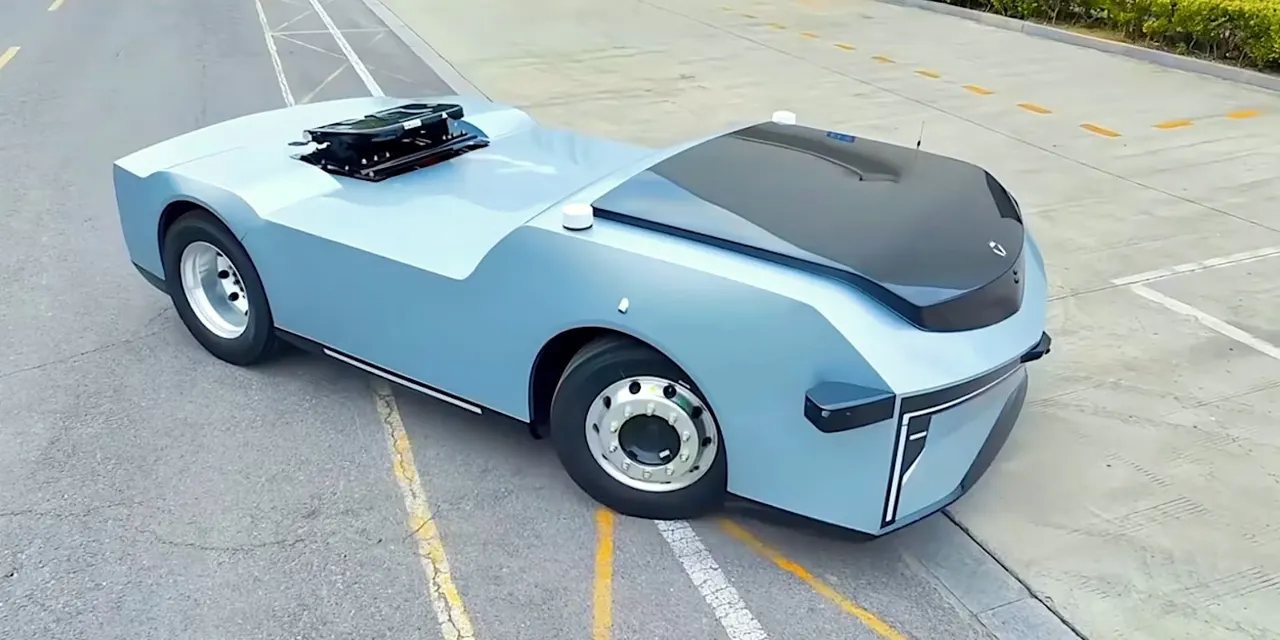
Autonomous a2z Unveils Driverless Factory Cargo Prototype
Korean self-driving firm Autonomous a2z has built a driverless logistics prototype that carries up to 1.3 tonnes of parts in and around factories and on roads.
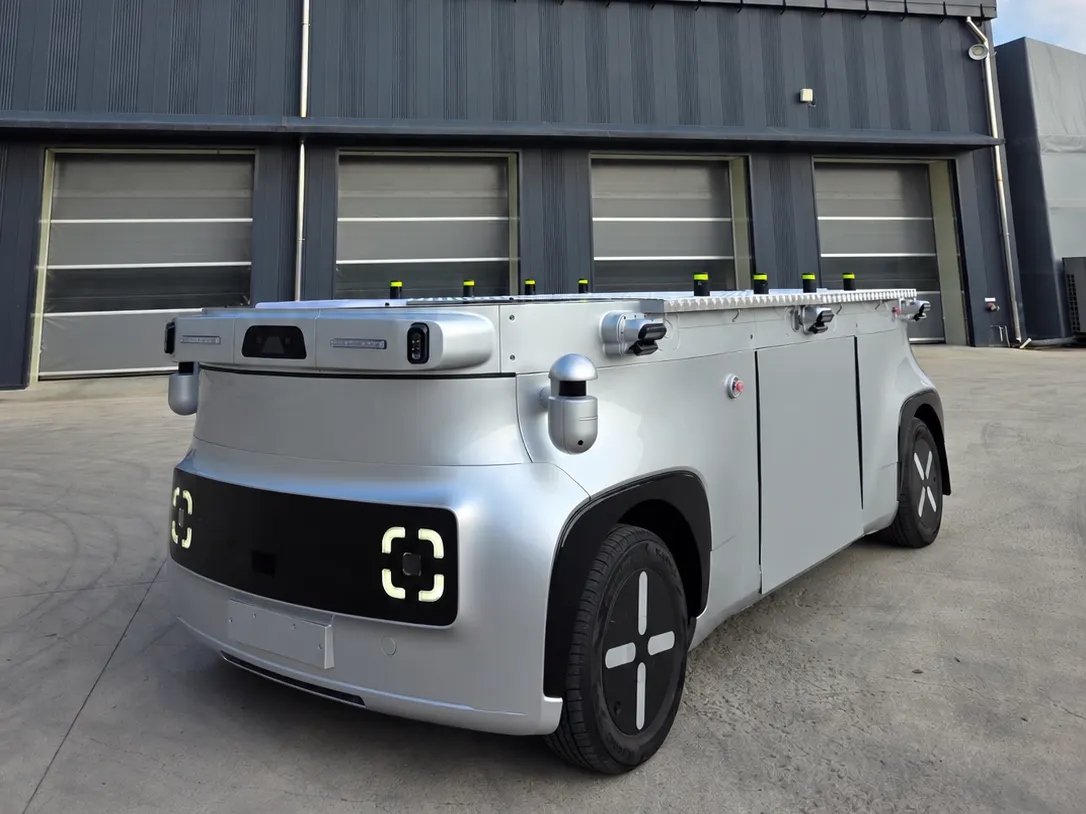
Korean self-driving company Autonomous a2z has unveiled a prototype driverless logistics vehicle that hauls industrial parts on a flat cargo bed, with no driver's seat. The vehicle can carry up to 1.3 tonnes and is designed to move between factory interiors, factory grounds and public roads.
The prototype was developed under a government-backed project on commercializing a multipurpose, mid-size unmanned autonomous vehicle platform, supported by the Ministry of Trade, Industry and Resources. Autonomous a2z leads the project, with KC Motors, Prosco, Metech, Ulsan Technopark and Chungbuk National University taking part. It began last July and runs through 2027.
Built on the ROii Level 4 platform
The vehicle is based on ROii, the Level 4 autonomous vehicle the company already operates. Level 4 means the car drives itself within a defined area without human intervention. The camera, lidar and radar setup was kept, while the body was reworked: the roof and enclosed cargo box are gone, replaced by a "skateboard"-style flat deck that makes it easier to load parts of varying size and shape. Lashing hooks and guards keep loads from shifting or falling.
Factory-specific safety features were added as well. Lights projected on the floor show direction of travel and mark safety lines, so workers can read the vehicle's status at night, in dark interiors or in bad weather. Emergency-stop and power switches sit where workers can reach them from outside the vehicle, under covers that keep out rain and dust.
Next: pilot at Gwangju Global Motors
With Chungbuk National University, the company is developing technology that infers maps so the vehicle can run unmanned inside factories that lack high-definition maps. Autonomous a2z is also building an AI model that understands and responds to exceptional situations on factory floors.
In 2027 the company plans to deploy the vehicle at Gwangju Global Motors (GGM) to carry cargo from parts suppliers to the vehicle assembly plant. CEO Han Ji-hyung said the company now has a base to connect the self-driving know-how gained in passenger transport with industrial logistics demand, and that the GGM pilot will test its practicality as automation demand grows at repetitive-transport sites such as factories and industrial complexes.
More from this day
See all →
Polymarket launches ultra-short Up/Down crypto markets in US

OpenAI Reportedly Plans to Buy Google TPU Chips, Eyeing Life Beyond Nvidia

Google Unveils Gemini 4 Carbon and Genie 4 AI Models

Apple unveils MacBook Pro with OLED touchscreen, from $2,899
More in: Automotive
See all →
Hyundai Motor Group Advances $9 Trillion Won Saemangeum AI Valley
Tesla Cybercab Battery Pack Aims to Fix Model Y Repair Woes
Ford Fathom EV Truck at $28,350 Adds Built-In Home Power Backup