Apple's HALO Lets a Unitree G1 Robot Navigate Unseen Homes
Apple researchers trained HALO in 1,000 virtual homes and reached 91% success in 360 real-world trials with a Unitree G1 humanoid carrying a Mac mini M4 Pro.

 SUMO· the number puzzle
 Dialo· learn languages by speaking
 ediviewer· read EDI files like documents
 giftdetect· the right gift in minutes
Apple researchers have built a system that lets a humanoid robot sit on a chair, squeeze through a half-open door or crawl under a table in rooms it has never seen. The system, called HALO, reached 91% success across 360 real-world trials in six interiors that were never scanned or used for training.
The paper, titled Perceptive Humanoid Motion from Simulation, describes a setup in which the robot interprets a command and picks whole-body movements based on camera images alone. It needs no prior map of the home and no pre-recorded motion for each task. It can also push boxes and chain several actions into a longer sequence.
Trained in 1,000 virtual homes
The biggest obstacle in humanoid training is data, since people usually have to demonstrate behaviors through teleoperation or motion capture. Apple instead generated 1,000 virtual homes with different layouts and furniture, producing nearly 163,000 training episodes, about 300 hours of robot motion. Each example paired a command, the robot's camera view and a matching movement sequence. Invalid attempts, such as a foot passing through the floor, were filtered out automatically. Building the dataset took 48 hours on 250 Nvidia H100 GPUs.
Variety proved decisive. Trained in a single environment, the system succeeded 43% of the time when sitting in new simulated rooms. With 1,000 environments, that rose to 84%.
A Chinese robot with a Mac on its back
Apple did not build its own humanoid. The team used a Unitree G1, adding a head camera and a housing with a Mac mini M4 Pro with 64 GB of memory. The Mac interprets commands and plans movement, while the robot's Nvidia Jetson Orin NX handles the rest, so no external computer is needed.
HALO has three modules: one splits a command into simpler steps, another plans the next 5 seconds of whole-body motion about three times per second, and a 50 Hz controller drives the motors and keeps balance.
Where it still fails
Crouching under an obstacle succeeded in every trial, doorway passing in 93%, reaching an object in 92%, crawling in 90%, pushing boxes in 88% and sitting in 85%. Multi-step tasks fared worse, averaging 70% in a single real environment. The hardest sequence, crouching, approaching an object and pushing a box, worked only half the time. The researchers noted that after the first action the robot often ended up positioned so that the next target was out of view.
Apps worth a look
SUMO: the number puzzleTap the right tiles, add them up, hit the target. Easy to learn, hard to master. Free, for all ages.
Dialo: learn languages by speakingTalk to an AI conversation partner; every sentence comes back corrected and explained in your language. 9 languages, A1 to C2.
ediviewer: read EDI files like documentsOpen EDIFACT and X12 messages, see every segment explained, convert to JSON/XML, export PDF and Excel. Runs locally, no upload.
giftdetect: the right gift in minutesPick who it is for, the occasion and their personality. The search engine reads product descriptions from local shops and ranks what fits. Free, no sign-up.
More from this day
See all →
Calogena wins €40 million EU grant for first commercial SMR
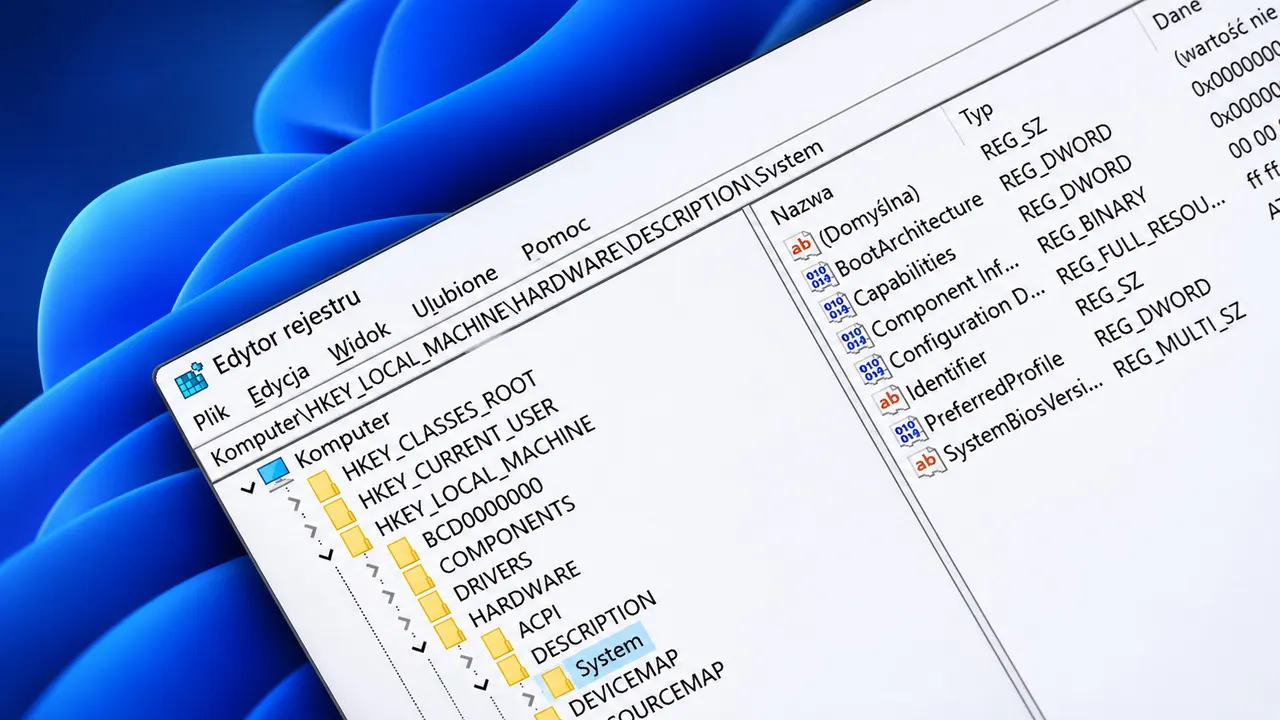
Windows 11 Registry Editor Gets a WinUI 3 Version as a Demo

JRH ASI to Finance Radar System Production for Ukrainian Partner